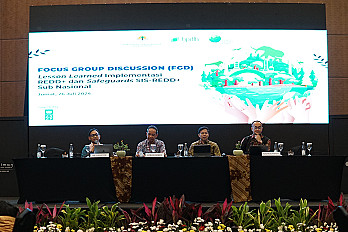
The Directorate of Climate Change Mitigation, DJPPI with support from the RBP REDD+ GCF managed by BPDLH has carried out facilitation to sub-national (provincial) areas for socialization regarding strengthening the REDD+ architecture, including strengthening REDD+ Safeguards and filling out the Safeguards Implementation Assessment Tool (APPS) on the REDD+ Bagi website. Indonesia, the implementation of REDD+ Safeyards is a requirement if you want to get RBP both bilaterally and multilaterally. In connection with this, the Directorate of Climate Change Mitigation carried out a Focus Group Discussion (FGD) on Lessons Learned Implementation of REDD+ and Sub-National SIS-REDD+ Safeguards.
Ir. H. Sepdinal, ME as Chair of the SNPMU BioCarbon Fund Program - Initiative for Sustainable Forest Landscape provided material with the title "Architectural Preparation and Implementation of REDD+ (Reducing Emissions From Deforestation and Forest Defradation) in Jambi Province", in the material it was explained how the regulatory preparations were implemented Jambi provincial government regarding REDD+ implementation, institutional architecture of the Jambi Province GHG Emission Reduction work unit, Exit Strategy for REDD+ Implementation in Jambi Province. as well as the results and products produced by each sector in the SNPMU BioCF-ISFL Secretariat, Jambi Province.
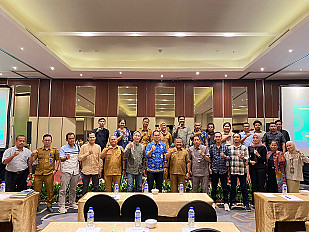
In connection with the implementation of the BioCF=ISFL Program in Jambi Province, one of the detailed activities and objects in the program is the private sector and community groups. The private sector and community groups will later become one of the recipients of performance-based incentives in accordance with the agreed benefit criteria, for The FGD was carried out which discussed Performance Based Incentives for the Private Sector and Community Groups, as well as the implementation of ISPO for companies and independent farmers as well as support for RAD KSB.
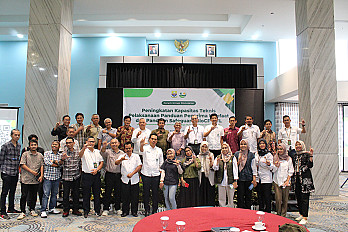
Increased Technical Capacity for the Implementation of the Beneficiary Identification Guide and BioCF ISFL E&S Safeguard Guide
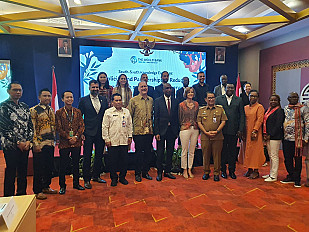
BALIKPAPAN - Head of the Jambi Province Development Planning Agency, Ir. Agus Sunaryo, M.Si and accompanied by the Head of the Economy and Natural Resources Division of the Jambi Province Bappeda, Dr. Ahmad Subhan, S.IP, M.Si and Sub-National Chair of PMU BioCF-ISFL Jambi, ir. H. Sepdiinal, ME attended the South - South Knowledge Exchange meeting, participated in discussion forums from 3 countries such as Indonesia, Brazil and the Democratic Republic of Congo, where this activity was facilitated by the World Bank, which took place at the Platinum Hotel, Monday 27 May 2024.
South - South Knowledge Exchange itself is a knowledge exchange activity by developing countries or could also be countries in the global south. In the presentation, the Sub-National Chair of PMU BioCF-ISFL Jambi, provided an explanation regarding reducing carbon emissions from deforestation and forest degradation in Jambi Province through BioCarbon Fund - Initiative for Sustainable Forest Landscape activities.
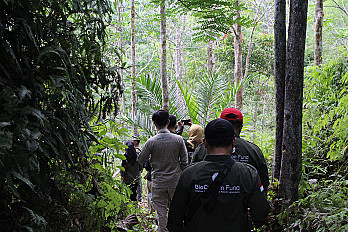
Karak Apung Village, located in Bungo Regency, Jambi Province, is a clear example of the successful implementation of the Social Forestry program. Through the Apung Mandiri Farmers Group (Gapoktan), the local community is gradually building economic independence and preserving the environment through forest and land rehabilitation (RHL)-based agricultural activities.
The majority of Gapoktan Apung Mandiri members depend on fruit crops such as coconut, durian, areca nut, and avocado for their livelihoods. These commodities are not only their primary source of income but also part of a sustainable agricultural strategy that the community continues to develop amidst land dynamics and limited access.
The RHL activities carried out in this village are part of the Bungo KPHP program and are conducted in an area classified as transmigration land and within the Social Forestry area. In accordance with the provisions of the Ministry of Environment and Forestry (KLHK), support provided through the Social Forestry scheme is limited to the provision of plant seedlings, without covering the costs of the planting process.
The community's planting efforts were also carried out strategically. Initially, some of the land was planned to be converted to oil palm plantations, but the plan encountered technical challenges. Oil palm and rubber plants are known to compete for nutrients, which can ultimately reduce the productivity of both crops. As a solution, the community decided to intersperse the planting with fruit trees, thus maintaining plant diversity and land productivity.
The journey to recognition of management rights through the Social Forestry scheme was not smooth. In 2019, the process experienced conflict with several upper-class community groups in Bungo Regency. However, through collective struggle and the appropriate legal approach, the Karak Apung community successfully defended their rights to the area.
The success in obtaining Social Forestry permits was also due to the innovative approach employed by the Ministry of Environment and Forestry in the Jambi region, namely the jareng gebol (joint, proactive, collaborative) method. This approach expedited the application process because officers went directly to the field, gathered the community, conducted outreach, assisted in the preparation of proposals, and carried out expeditious reviews and revisions. In this way, the time required to obtain a management permit is usually less than one year.
The Apung Mandiri Farmers Group (Gapoktan Apung Mandiri) is no longer just an ordinary farming group. They are a symbol of successful collaboration between the community, government, and nature. With a spirit of mutual cooperation and innovation in land management, the Karak Apung community has proven that environmentally friendly and sustainable agriculture is not a dream, but a reality that can be achieved together.
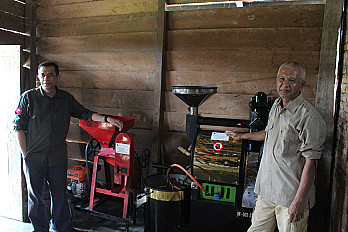
Since its founding in 2022, the Kelumbung Coffee Social Forestry Business Group (KUPS) has been a key driver in developing the potential of local coffee in Kelumbung Village, Bungo Regency, Jambi. Formed on the initiative and under the guidance of Warsi and the Bungo Production Forest Management Unit (KPHP), the group has 15 members, consisting of women, men, and local youth who are passionate about developing coffee businesses in their area.
One of the main advantages of the Kelumbung Coffee KUPS is its coffee processing machine, currently the only modern coffee processing facility in the area. This machine is not only used for KUPS production needs but is also open to the general public who want to learn about the coffee processing process—from roasting to ready-to-drink coffee grounds. This approach creates an educational space while empowering the surrounding community to become more independent in managing their own produce.
The majority of the Kelumbung community owns coffee plantations, but is hampered by a lack of processing equipment. With the establishment of the KUPS, it is hoped that the coffee produced by the community can be optimally collected and processed into high-value products. This is a strategic step to increase community income and create a sustainable local coffee supply chain.
In carrying out its production activities, the Kelumbung Coffee KUPS prioritizes high-quality, selected coffee beans. The coffee produced is currently marketed to several cafes in Bungo Regency, which are beginning to recognize and appreciate the distinctive taste of Kelumbung coffee. Going forward, the KUPS aims to become not only a processor but also a distributor of coffee beans for the surrounding community, producing an average of 7 to 8 tons of coffee beans per harvest season.
However, the Kelumbung Coffee KUPS still faces several challenges. One urgent need is the construction of its own production facility. Currently, coffee processing is carried out in the private home of one member, which also houses children. This undoubtedly impacts the effectiveness and comfort of the production process. By having a proper production house, KUPS is expected to be able to increase processing capacity and maintain the quality of the products produced.
The KUPS Kopi Kelumbung (Indonesian Coffee Association) is a living example of how managing forest products through a social forestry approach can foster community economic independence. With the right support, this group has great potential to become a driving force for the local economy, while simultaneously preserving the sustainability of the forest and coffee culture in the region.
If you would like this article translated into other formats, such as brochures, presentations, or social media posts, I can assist with customization.

Meeting to discuss the results of calculating the accuracy value of land cover change data for Jambi Province
Held by Team MAR BioCF-ISFL Jambi on 6 to 8 May 2024
Tanjung Jabung Timur – Pertemuan II Bimbingan Teknis (Bimtek) Pascapanen BioCF dalam rangka pelaksanaan Hibah BioCF ISFL Provinsi Jambi digelar pada Senin (6/5/2024) di rumah Ketua Kelompok Tani (KT) Sumber Makmur, Desa Suka Maju, Kecamatan Geragai, Kabupaten Tanjung Jabung Timur. Kegiatan ini merupakan kelanjutan dari Bimtek I yang telah dilaksanakan sebelumnya.
Sebanyak 15 peserta mengikuti kegiatan tersebut, terdiri dari 2 orang petugas dinas kabupaten, 11 orang Penyuluh Pertanian Lapangan (PPL) Desa Suka Maju, serta 12 anggota kelompok tani. Dari total peserta, 9 orang berjenis kelamin laki-laki dan 6 orang perempuan. Petugas dinas dan PPL juga berperan sebagai pemandu dalam praktik lapangan.
Materi pertama mengenai Pedoman Penanganan Pascapanen Hasil Pertanian Asal Tanaman yang Baik disampaikan oleh perwakilan Dinas Tanaman Pangan, Hortikultura dan Pertenakan, Khairul Asrori, SP, M.Si. Selanjutnya, Tahapan Penanganan Pascapanen Padi dipaparkan oleh PMHP Ahli Muda dari Badan Standardisasi Instrumen Pertanian, Desi Nofriati, SP, M.Si. Materi tentang Titik Kritis Good Handling Practices (GHP) pada aspek penerimaan, penimbangan, pembersihan, sortasi dan grading disampaikan oleh Kabid Tanaman Pangan Dinas Tanaman Pangan dan Hortikultura Kabupaten Tanjung Jabung Timur, Ir. Mahmud. Sementara itu, Titik Kritis GHP pada aspek pengemasan, pelabelan, penyimpanan dan pengelolaan peralatan disampaikan oleh PPL Desa Suka Maju, Rts. Ayu Wulandari.
Dalam pemaparan materi yang ditegaskan bahwa peningkatan produksi padi harus diiringi dengan penanganan pascapanen yang tepat. Penanganan yang kurang baik berpotensi menyebabkan kehilangan hasil (susut), penurunan mutu gabah dan beras, serta turunnya rendemen giling. Tahapan
Pada tahun pemanenan, narasumber menjelaskan pentingnya panen pada umur optimal, yakni saat 90-95 persen gabahh pada malai telah menguning keemasan atau sekitar 30-35 hari setelah berbunga rata, setara 135-140 hari setelah tanam, dengan kadar air 22-23 persen di musim kemarau dan 24-26 persen dimusim hujan. Penggunaan alat panen seperti sabit bergerigi tajam juga dinilai mampu menekan kehilangan hasil hingga 3 persen.
Kebiasaan petani yang menumpuk hasil panen tanpa alas dan menunda perontokan dinilai berisiko menimbulkan susut hasil antara 0,94 hingga 2,36 persen. Selain itu, gabah yang baru dipanen masih mengalami proses respirasi yang menghasilkan panas dan uap air sehingga berpotensi menurunkan mutu apabila tidak segera ditangani. Narasumber menganjurkan agar perontokan segera dilakukan dan pemupukan tidak lebih dari satu malam dengan tinggi maksimal satu meter.
Dalam proses pengeringan, peserta diingatkan pentingnya menurunkan kadar air gabah hingga 14 persen agar aman disimpan. Selama ini, kelompok tani masih menjemur gabah di lahan dan jalan desa menggunakan terpal. Idealnya, penjemuran dilakukan di lantai jemur yang datar agar hasil pengeringan merata. Proses pembersihan dan sortasi juga penting untuk meningkatkan daya simpan, rendemen giling dan harga jual.
Pada sesi praktik lapangan di gudang RMU Gapoktan, peserta melakukan penjemuran, penampian, serta penghitungan susut hasil yang tercatat sebesar 36,75 persen. Hasil pengamatan di gudang menunjukkan penyimpanan belum sesuai standar, seperti alas penyimpanan yang rendah, susunan karung yang menempel ke dinding dan belum menggunakan pola susun bata, serta kebersihan gudang yang perlu ditingkatkan.
Praktik penggilingan gabah menjadi beras juga dilakukan untuk menghitung rendemen. Varietas Inpara menghasilkan rendemen sebesar 63,75 persen, sedangkan varietas Sultan dengan sistem tanam jajar legowo mencapai 69,23 persen. Hasil ini menunjukkan bahwa penanganan dan sistem budidaya turut memengaruhi capaian rendemen beras.
Kegiatan ditutup dengan diskusi kelompok dan post test berisi 20 soal pilihan ganda. Hasil evaluasi menunjukkan adanya peningkatan pemahaman dan pengetahuan peserta terhadap penanganan pascapanen padi yang baik. Melalui Bimtek ini, diharapkan petani KT Sumber Makmur mampu menerapkan teknik pascapanen yang tepat guna menekan kehilangan hasil serta meningkatkan mutu dan nilai jual beras.
Tanjung Jabung Timur – Pertemuan I Bimbingan Teknis (Bimtek) Pasca Panen BioCF dalam rangka pelaksanaan hibah BioCF ISFL Provinsi Jambi digelar pada Senin (29/4/2024) di rumah Ketua Kelompok Tani (KT) Sumber Makmur, Desa Suka Maju, Kecamatan Geragai, Kabupaten Tanjung Jabung Timur.
Kegiatan yang berlangsung mulai pukul 09.00 WIB tersebut diikuti 15 peserta, terdiri dari dua orang petugas dinas kabupaten, satu orang Penyuluh Pertanian Lapangan (PPL) Desa Suka Maju, serta 12 anggota kelompok tani. Dari total peserta, sembilan orang merupakan laki-laki dan enam orang perempuan. Petugas dinas kabupaten dan PPL turut berperan sebagai pemandu lapang dalam sesi praktik.
Acara diawali dengan pembacaan doa oleh anggota kelompok tani, kemudian dilanjutkan sambutan dari Tim Provinsi yang disampaikan oleh Kepala Bidang Tanaman Pangan dan Hortikultura Provinsi Jambi, Khairul Asrori, SP, M.Si. Selanjutnya, pembukaan dan pengarahan disampaikan oleh Kepala Bidang Penyuluhan Dinas Tanaman Pangan dan Hortikultura Kabupaten Tanjung Jabung Timur, Edival, SP.
Dalam arahannya, Edival menekankan pentingnya mengikuti bimtek secara serius guna meningkatkan kompetensi petani, khususnya dalam penanganan panen padi yang baik dan benar. "Dengan penanganan yang tepat, diharapkan beras yang dihasilkan lebih bermutu dan mampu bersaing dengan produksi dari luar daerah," ujarnya.
Materi bimtek disampaikan oleh narasumber dari dinas provinsi, dinas kabupaten, serta Badan Standardisasi Instrumen Pertanian (BSIP) Provinsi Jambi. Materi yang diberikan meliputi Pedoman Pelaksanaan Bimtek Pasca Panen (Good Handling Practices/GHP) Komoditas Tanaman Pangan dan Hortikultura, Teknik Penanganan Panen Padi (GHP) oleh PMHP Ahli Muda BSIP Provinsi Jambi Desi Nofriati, SP, M.Si, serta pemaparan tentang titik kritis aspek panen seperti waktu dan cara panen.
Selain itu, peserta juga mendapatkan materi mengenai alat dan kriteria panen padi sawah serta pembahasan berbagai permasalahan umum komoditas pertanian. Disebutkan bahwa secara teoritis susut cecer atau keilangan hasil dapat terjadi pada setiap tahapan, mulai dari panen hingga penyimpanan, dengan kisara 30-35 persen, Dalam satu petak ubinan, kehilangan hasil bahkan dapat mencapai satu kilogram gabah. Kondisi ini tidak hanya merugikan secara ekonomi, tetapi juga berkontribusi terhadap peningkatan emisi gas rumah kacar akobat proses metabolisme yang menghasilkan gas karbon.
Secara umu, kendala yang dihadapi petani KT Sumber Makmur saat panen terjadi pada musim hujan, ketika lahan persawahan tergenang air pasang. Kondisi ini menyebabkan panen dilakukan di dalam air dan proses pengeringan gabah dapat memakan waktu hingga satu bulan, sehingga beras yang dihasilkan cenderung berwarna kemerahan.
Pada pelaksanaan bimtek kali ini, praktik lapang panen tidak dapat dilakukan karena telah melewati masa panen. Sebagai gantinya, teknik panen yang baik ditampilkan melalui media video. Diketahui, kegiatan panen di kelompok ini masih dilakukan secara gotong royong dengan cara tradisional menggunakan sabit dan perontokan menggunakan power thresher pinjaman dari brigade. Pengeringan gabah dilakukan secara manual dengan penjemuran di atas terpal.
Dalam sesi praktik penyimpanan, terungkap bahwa kondisi gundang atau tempat penyimpanan gabah milik anggota kelompok tani masih belum memadai. Karung gabah disimpan tanpa palet, menempel ke dinding, serta bercampur dengan komoditas lain dan peralatan rumah tangga, Kondisi tersebut berpotensi meningkatkan kelembaban dan mempercepat kerusakan gabah, sehingga kualitas beras menjadi rendah dan banyak menghasilkan beras patah.
Sebagai solusi, narasumber menekankan pentingnya penggunaan alas kayu atau palet di bawah karung, penyusunan karung tidak menempel dinding, serta disusun menyerupai pola bata untuk menjaga sirkulasi udara.
KT Sumber Makmur sendiri merupakan kelompok tani yang mengusahakan padi sebagai komoditas utama dengan luas lahan produktif sekitar 20 hektare dan intensitas tanam dua kali setahun (IP 200). Produksi padi rata-rata mencapai 5 ton per hektare.
Melalui Bimtek Pasca Panen BioCF yang direncanakan berlangsung dua kali pertemuan di setiap lokasi, petani diharapkan semakin memahami kriteria panen dan teknin penanganan pasca panen yang baik. Dengan demikian, angka kehilangan hasil dapat ditekan dan kualitas beras yang dihasilkan semakin meningkat.
-thumb.jpg )
In order to monitor and evaluate the implementation of the Jambi Sustainable Landscape Management Project (JSLMP) BioCF-ISFL Program activities in Jambi Province in 2024 and follow up on the results of the FGD on the Monitoring and Evaluation Plan (Monev Plan) for the 2024 Annual Work Plan, an FGD was carried out on Refining the Draft Monev Plan Document 2024 on Tuesday, March 26 2024.
Explained by Mas Rezky Syahrizal Yusuf as Monev Specialist Steps for Preparing Monitoring and Evaluation Plan Documents (Monev Plan)
1. Determine the objectives/scope of Monev
2. Understand the definitions and targets of indicators/outputs. Information is provided in the PAD
3. Build a strong (comprehensive) definition of the output
4. Collection of secondary and primary data (methods and tools)
5. Data analysis and reporting