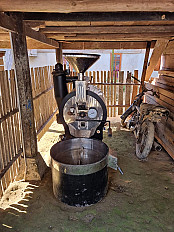
The 2022 Coffee Roasting Machine Procurement Program, facilitated by the Bungo Forestry and Food Crops Management Agency (KPHP), has had a positive impact on the Tembesu Patah Social Forestry Business Group (KUPS) in Senamat Ulu Hamlet, Bathin III Ulu District. This assistance is a tangible form of support in encouraging increased added value for coffee, a staple food for the local community.
KUPS Tembesu Patah currently has nine active members, consisting of four women and five men. This group has long been involved in coffee processing and has shown significant progress since receiving program support. With a coffee plantation area of approximately 10 hectares, harvests can be carried out twice a week, ensuring a relatively secure supply of raw materials.
Before receiving the roasting machine, the group was only able to sell coffee as raw beans. This limited the product's selling value, making it dependent on the market price of the raw materials. However, since the roasting machine was installed, the group has begun further processing, including ground coffee. The roasting process is carried out on an order-based basis, with a maximum capacity of five kilograms per batch. The processed coffee is then marketed to local shops at a price of IDR 18,000 per person (100 grams).
The presence of a roasting machine directly increases the product's selling value and encourages group members to be more serious about developing their business. Coffee planting activities have also increased in response to the increasing business opportunities.
In terms of supporting facilities, the group has been utilizing a drying floor facility provided by the Warsi Foundation since 2024 for the drying process of dried coffee. Furthermore, a production house was also built with the support of the same foundation, although the electrical installation is still in the final stages. Currently, the grinding machine has been installed in the production house, while the roasting machine remains at the KUPS Chairperson's house because the production building is not yet fully ready for use.
Despite showing positive progress, KUPS Tembesu Patah still faces several challenges. Access to clean water for production needs remains limited, potentially hampering the processing process. Furthermore, the group acknowledges a limited understanding of processed coffee quality standards, which impacts its ability to compete in the broader market.
Going forward, the group hopes to improve the quality of its product packaging to make it more attractive and meet modern market standards. Further support in the form of training on product quality improvement, marketing strategies, and assistance with fruit tree seedlings for business diversification is also highly anticipated to strengthen the group's economic independence.
The provision of roasting machines has proven to encourage farmer groups to process coffee beans into ground coffee, thereby increasing the added value and selling price of their products. This has also increased the farmers' enthusiasm for developing their businesses.
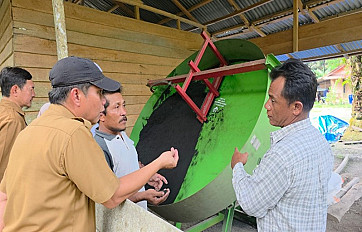
Muaro Jambi – Amidst the growing trend of sustainable agricultural development, Nyogan Village in Mestong District, Muaro Jambi Regency, has become a shining light in efforts to increase the productivity of smallholder crops. Through a program from the Jambi Province Food Crops, Horticulture, and Livestock Service (TPHP), the Karya Abadi Farmers Group received concrete support to increase its capacity in animal feed and compost processing.
Training and Equipment Assistance: The Beginning of Change
In the 2024 fiscal year, the TPHP Service held a Technical Guidance (Bimtek) for members of the Karya Abadi Farmers Group. This training provided not only knowledge but also practical skills on how to process animal feed into silage, as well as how to utilize livestock and plantation waste to create organic compost.
In addition to training, this group also received assistance with facilities and infrastructure, including a granulator, a cultivator, forage seeds such as odot and indigofera, and various other supporting equipment. With this support, the farming group began producing feed and compost for their own needs and those of the surrounding community.
From Waste to Fertilizer: Innovation Amidst Limitations
After participating in the technical guidance, group members were able to independently process livestock waste (manure, urine, leftover feed) and plantation waste (palm fronds and waste) into compost and forage for livestock. While compost production is still small-scale, it is sufficient to meet the group's needs and is sold in limited quantities to the village community.
Strikingly, the quality of the compost produced was tested at the Jambi Ministry of Agriculture's BSIP soil laboratory. The results were quite good, although the nitrogen (N) content was found to be low—an element that is crucial for the growth of oil palms, which are widely cultivated in the area.
Field Challenges: Livestock Diseases and Lack of Raw Materials
Despite showing progress, the Karya Abadi Farmers Group's journey has not been without obstacles. One serious problem is the dwindling livestock population. From an initial 12, only two remain. Diseases such as scabies and Jembrana are the main causes of livestock deaths.
Furthermore, the lack of permanent pens in surrounding villages makes collecting livestock manure for compost difficult. Without an adequate waste supply, compost production is hampered.
As a solution, the group is trying to innovate by using solid factory waste as an alternative raw material. This method has been used twice, but it faces challenges in mobilizing oil palm fronds, which requires proper transportation.
Seedlings Not Growing Optimally: Dry Season a Barrier
Other efforts to support animal feed production, such as planting odot grass and indigofera, have also not been optimal. Seedling assistance provided during the dry season resulted in very low germination rates—only around 30% for odot, while indigofera almost completely dried up.
The Way Forward: Further Support Needed
Despite facing a number of obstacles, the enthusiasm of the farmers in Nyogan Village remains high. They have demonstrated that with proper training and adequate tools, waste processing can become a productive resource that supports local agricultural and livestock activities.
However, to maintain sustainability, additional support is needed in the form of:
- Preventive livestock health care,
- Assistance with collective pens to facilitate waste collection,
- Improving seed distribution times according to the planting season,
- And logistical support for raw material mobilization.
Nyogan Village is proof that when farmers are equipped with the knowledge, tools, and mentoring, they can become agents of change for sustainable agriculture—even though the path they take remains challenging.
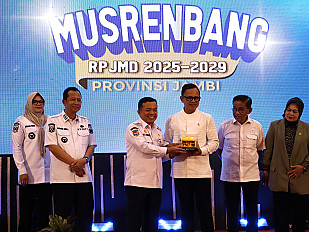
Bio Carbon Fund - ISFL Jambi - Jambi Governor Al Haris emphasized the importance of program synchronization between the central and regional governments in order to sharpen and align central and regional programs in the same direction in Development. He conveyed this assertion when attending the Development Planning Meeting (Musrenbang) for the Jambi Province Medium-Term Development Plan (RPJMD) for 2025-2029, held at the Swiss Bell Hotel, Jambi City, Wednesday (21/05/2025). Before the Musrenbang began, Governor Al Haris directly checked the attendance of the regents/mayors one by one and immediately gave a stern warning to the regents who were absent and only sent their representatives. According to Governor Al Haris, because this Musrenbang activity is very important, at least the regents/mayors who are unable to attend can send a deputy regent/deputy mayor.
"This Musrenbang is very important to synchronize the work program activities of the district to the center so that they can be in line. Because the Government is making simultaneous Pilkada to align district, provincial and national programs," said Governor Al Haris.
Governor Al Haris said, one of the stages of the preparation of the RPJMD regulated in the Regulation of the Minister of Home Affairs Number 86 of 2017 concerning Procedures for Planning, Controlling and Evaluation of Regional Development, Procedures for Evaluation of Draft Regional Regulations on RPJPD and RPJMD, and Procedures for Amendments to RPJPD, RPJMD and RKPD is the Musrenbang RPJMD.
"The Musrenbang RPJMD for 2025-2029 is an important momentum for the development of Jambi Province for the next five years, because it is a medium for sharpening, aligning, clarifying and agreeing on the goals, targets, strategies, policy directions, and regional development programs that have been formulated in the initial draft of the RPJMD," said Governor Al Haris.
On that occasion, Governor Al Haris explained the macro conditions of Jambi Province. In 2024, Jambi's economy grew by 4.51 percent, and amidst global uncertainty, Jambi's economy continued to grow quite well in the first quarter of 2025 by 4.55 percent compared to the first quarter of 2024 (year on year). In this quarter, growth occurred in all business sectors, except for the construction sector which contracted by 0.83 percent. Meanwhile, the structure of Jambi Province's GRDP did not show significant changes, still dominated by the agriculture, forestry and fisheries business sector by 34.11 percent, and the mining and excavation business sector by 13.83 percent.
"The Open Unemployment Rate in February 2025 was at 4.48 percent or the same as in August 2024. However, the number of working population increased by 26.3 thousand people compared to February 2024 or increased by 1.48 percent," explained Governor Al Haris.
"For the percentage of poor people, we have succeeded in reducing it from 7.58 percent in March 2023 to 7.26 percent in September 2024. Improvements in most of these macro indicators cannot be separated from the success of Jambi Province in controlling the inflation rate at around 1.43 percent in 2024 and inflation until April 2025 of 2.1 percent (year to date)," he continued.
Governor Al Haris, referring to the strategic issues and the Vision of JAMBI MANTAP Competitive and Sustainable in 2029 under the Ridho of Allah SWT, there are three missions that will be implemented. "There are three missions that will be implemented, (1) Strengthening Effective and Efficient Governance, (2) Strengthening Regional Competitiveness and Productivity in the Fields of Agriculture, Trade, Industry and Tourism, and (3) strengthening sustainable development and quality of human resources," said Governor Al Haris.
"The first mission aims to realize accountable, transparent and adaptive governance. While the second mission aims to increase regional competitiveness by optimizing superior sectors. While the third mission has two objectives, namely the first is to realize a low-carbon economic system, efficient in the use of resources, and socially inclusive, and the second is to realize quality, cultured and gender-equal human resources," he continued.
Furthermore, Governor Al Haris also said that in the future there are 12 priority programs that will be implemented in the next five years, namely (1) Bureaucratic Reform, (2) Digitalization of public services, (3) Increasing Regional Fiscal Capacity, (4) Development of Areas and Infrastructure in the Agricultural, Trade, Industry and Tourism Sectors, (5) Development of Start Up Ecosystems, Technological Innovation and Digital Transformation of MSME and Cooperative Products, (6) Increasing Agricultural Land Productivity to Support Village and Regional Food Barns, (7) Development of the Sengeti Tungkal Sabak Strategic Area or SENTUSA as a Fast Growing Area, (8) Facilitating the Acceleration of Energy Security to Support Strategic Areas, (9) Accelerating the Development of Regional Transportation Logistics Systems, (10) Strengthening the Primary Health System and Improving the Quality of Education, (11) The Jambi Advance Network Program abbreviated as PRO-JAMBI, and (12) Reducing GHG Emissions Towards Net Zero Emissions.
"Specifically for PRO JAMBI, this program is a Quick Wins in an effort to accelerate the reduction of development inequality and poverty reduction which will be carried out every year during our leadership. This program will be implemented by the Regional Apparatus for menus that are the authority of the Provincial Government, as well as in the form of financial assistance for menus that are not the authority of the Provincial Government. The first menu is Pro Jambi Cerdas with educational assistance activities for high school/vocational school students from underprivileged families, and S1, S2 and S3 scholarships for the public, as well as vocational education in partnership with Institutions/Business Worlds both domestically and abroad," said Governor Al Haris.
In addition, Governor Al Haris also revealed, the second menu is Pro Jambi Healthy, including BPJS health subsidies for poor families, nutritional assistance for pregnant women, toddlers and adolescents, and a healthy living community movement. The third menu is Pro Jambi Tangguh, including home renovation, working capital assistance for MSMEs/Home Industries/start-ups/millennials, assistance for agricultural, livestock, plantation, fisheries and forestry infrastructure, operational assistance for traditional institutions, increasing life skills for millennials/Gen Z ready to work, job fairs or stable competitive job exchanges, work accident insurance and death insurance for Vulnerable Workers, and 2 percent cheap credit for farmers, fishermen and traditional market traders. The fourth menu is Pro Jambi Responsif, in the form of assistance for the disabled, abandoned children, the elderly and the socially disadvantaged, incentives for Babinsa/Babinkamtibmas, forming a BERSINAR Village or Drug-Free Village and the Lapor Wak DUL channel (Wo Haris and Pak Dul) which collects aspirations and public complaint services.
"The last menu is Pro Jambi Agamis, in the form of honorariums for religious employees, religious teachers and Madrasah Diniyah Takmiliyah and Islamic Boarding Schools, honorariums for sub-district Dai, free umrah assistance for religious teachers, Quran memorizers and outstanding religious employees, and the one village one Quran memorizer program," said Governor Al Haris.
Governor Al Haris also invited all regents/mayors throughout Jambi Province to commit together to achieving the development targets of Jambi Province. The same commitment is also for all Heads of Regional Apparatus within the Jambi Provincial Government. "We all must be more intensive in coordinating with the Central Government, including coordination between us in the Jambi Provincial Government and the Regency/City Governments throughout Jambi Province and other stakeholders, so that the development we carry out can synergize, have leverage, and provide the greatest possible benefits to the community," concluded Governor Al Haris.
Meanwhile, the Deputy Minister of Home Affairs (Wamendagri) of the Republic of Indonesia, Bima Arya Sugiarto in his remarks strongly supported the Governor's reprimand to the two regional heads who did not send their deputies with a stern warning, because they were not present and were not represented by their deputy regents to attend the 2025-2029 Jambi RPJMD Musrenbang. "The discipline shown by Governor Al Haris to the regents is what was instilled in the retreat from ministers to governors. That is what the regents/mayors must understand to tidy up our bureaucracy," said Wamendagri Bima Arya.
Bima Arya also explained that President Prabowo was inspired by the Chinese reformist figure, Deng Xiaoping. The figure is known to have succeeded in driving significant changes in his country to become one of the countries with the largest economic power in the world. It is hoped that this spirit can also be possessed by leaders in Indonesia. "I invite you to understand the President's way of thinking before we tinker with the RPJMD and so on," he explained.
In this Musrenbang, Governor Al Haris and Chairman of the Jambi Provincial DPRD M. Hafiz also witnessed the signing of the Agreement on the Minutes of the Musrenbang RPJMD Jambi Province for 2025-2029 by the regents/mayors throughout Jambi Province.
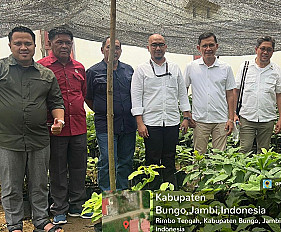
Bungo – The Bungo Forest Management Unit (UPTD) of the Bungo Forest Management Unit (KPHP) conducted monitoring and oversight activities for the 2025 BioCF ISFL Program as part of efforts to improve forest sustainability, reduce deforestation rates, and promote community welfare through sustainable forest management.
Various strategic activities were implemented throughout 2025, covering aspects of forest protection, conflict resolution, area rehabilitation, and strengthening community economies based on social forestry.
Regular Patrols and Community Patrols
To reduce deforestation and forest degradation, the Bungo Forest Management Unit (KPH) intensified routine patrols in several areas prone to encroachment and forest fires. These activities also involved local communities through community patrols.
As a result, there was a decrease in deforestation rates compared to the 2020–2023 period and a reduction in the number of hotspots and fires in the target areas. Furthermore, community participation in the community-based monitoring system increased.
Increasing Public Awareness
Forest fire prevention efforts were strengthened through outreach activities, conservation training, and campaigns in vulnerable areas. Community groups were also encouraged to actively monitor and report fires.
This program has resulted in a total of 487,903 hectares of sustainably managed natural forest. The number of hotspots has decreased significantly, accompanied by increased community awareness and involvement in forest protection.
Resolving Tenure Conflicts
To address land tenure conflicts in forest areas, the Bungo Forest Management Unit (KPH Bungo) applies a mediation and participatory mapping approach. Throughout 2025, two tenurial conflict cases were successfully resolved through conflict mapping, and two mediation sessions were conducted to mitigate land disputes.
This dialogue- and data-based approach is considered effective in creating solutions acceptable to all parties.
Area Rehabilitation and Agroforestry Development
The rehabilitation program has demonstrated positive results. Twenty hectares of critical land have been reforested through planting and maintenance, while 742 hectares have experienced reduced levels of degradation.
Sixteen rehabilitation coaching and monitoring activities have been conducted to ensure the program's sustainability. A one-hectare agroforestry demonstration plot has also been established as a model for integrated community-based management.
Community Economic Development
To improve the welfare of residents living around the forest, the KPH Bungo is developing businesses based on non-timber forest products (NTFPs) through the formation and strengthening of Social Forestry Business Groups (KUPS).
Capacity-building training has been provided to assisted groups, and partnerships have been established between community groups and the private sector. Several groups have even reached supply contract agreements with business partners to expand market access.
Seedling Provision and Digital Market Access
To support agroforestry and rehabilitation activities, the Bungo Forest Management Unit (KPH Bungo) provided quality seedlings for 20 hectares of community land, which were distributed to forest farmer groups.
In addition, digital marketing training was provided to improve the competitiveness of social forestry products. This step is expected to open wider market opportunities and create new sources of income for the community.
Conclusion
Based on the evaluation results, the implementation of the 2025 BioCF ISFL Program in the Bungo Forest Management Unit (KPH Bungo) demonstrated significant achievements in reducing deforestation and fire hotspots, resolving land tenure conflicts, increasing forest cover, and strengthening the community economy.
Through synergy between the government, communities, and the private sector, this program is a concrete step towards realizing sustainable forest management in the Bungo region.
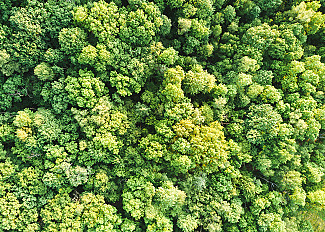
The world is currently facing a major challenge in maintaining a balance between economic development and environmental sustainability. Indonesia, as one of the world's most biodiverse countries, has a major responsibility in the global effort to reduce carbon emissions and conserve its natural resources. One initiative that provides hope for the future of sustainable development in Indonesia is the BioCarbon Fund Initiative for Sustainable Forest Landscapes (BioCF-ISFL) program implemented in Jambi.
BioCF-ISFL is one of the World Bank's programs that aims to support sustainable forest land management with a holistic approach. This program not only aims to reduce deforestation and land degradation, but also to improve the welfare of communities living around forest areas. This is why the program is highly relevant to the concept of sustainable development that includes economic, social, and environmental aspects. Jambi was chosen as the location for the program implementation because the province has rich forests that are one of the main pillars of the Sumatran ecosystem. However, the land in this province is also one of the largest contributors to greenhouse gas (GHG) emissions due to deforestation and forest degradation. Through this program, the Government of Indonesia is committed to reducing emissions as much as possible, a move that will not only impact the local environment but also the global one.
Phase of ImplementationThe implementation of the project is divided into several phases, with the pre-investment phase taking place in 2021-2025 being an important first step. In this phase, important interventions are made to strengthen institutions and policies related to sustainable land management. The goal is clear: to encourage changes at the policy level and implementation on the ground to be more aligned with emission reduction efforts. One indicator of the success of this program is the area of land that is managed sustainably.
In the first semester of 2024, 268,630 hectares of land in Jambi have been managed with an approach oriented towards emission reduction. Although this figure has not yet reached the 2025 end target, this achievement shows that landscape management efforts in Jambi Province are already on the right track. This management includes reforestation, land restoration, and sustainable forest management that involves various parties, including the private sector. However, the implementation of this project is not without challenges. Tenurial issues, land use conflicts, and forest fires are still challenges that need to be overcome.
One of the solutions proposed in the report is the implementation of social and environmental safeguards, as well as map-based conflict resolution mechanisms. These measures, although complex, are expected to ease land tenure conflicts that are often the source of deforestation problems. On the other hand, the program must also ensure that the benefit sharing mechanism (benefit & sharing & plan) works well. Through this mechanism, the Government is trying to ensure that the benefits of emission reductions are not only felt by the Government, but also by local communities who are most vulnerable to the impacts of climate change. Active participation from communities around forests and conservation areas is key to the success of this program. One thing that should be appreciated from the implementation of this project is the involvement of the private sector in the implementation of more sustainable land management practices.
In the first semester of 2024, 11 companies from the plantation sector have committed to support the emission reduction program in Jambi Province. This collaboration between the government, private sector, and community is expected to accelerate the achievement of emission reduction targets in the province. Not only that, the government also encourages companies to utilize the CSR (corporate social responsibility) forum as a platform to contribute to environmental programs that have an impact on emission reduction. This creates a mutually beneficial symbiosis between the Government, companies, and communities.
Keeping the forestOne of the advantages of the BioCF-ISFL program in Jambi is its integrative approach. The program involves various parties, including the local government, local communities, and the private sector, to work together in managing natural resources wisely. This shows that forest conservation and community welfare need not be seen as contradictory. Instead, they can complement each other. The program essentially provides incentives to local communities to protect forests, while encouraging them to develop environmentally friendly livelihoods. For example, farmers are taught sustainable agricultural practices that do not damage the forest, such as agroforestry and cultivating high-value crops without having to clear new land. This not only reduces pressure on the forest, but also increases the community's income.
One of the main objectives of the program is to reduce carbon emissions from deforestation and land degradation. Tropical forests in Indonesia, including in Jambi, have great potential as natural carbon sinks. By keeping forests intact, it is possible to reduce the amount of carbon emissions released into the atmosphere while helping to stabilize global climate change. In practice, this effort is not just about reducing emissions. The BioCF-ISFL program also provides a clear example that sustainable development does not have to come at the expense of economic growth. In fact, through a green economy approach, it can create new opportunities for communities around forest areas. From ecotourism to carbon trading, a variety of new economic opportunities can open up if everyone keeps the ecosystem healthy.
The future implementation of the BioCF-ISFL program in Jambi is expected to be an inspiration for other provinces in Indonesia that also have similar problems in terms of forest and land management. A collaborative approach, involving various stakeholders, is the key to the success of this program. Thus, other local governments can learn from Jambi's experience in implementing sustainable development based on environmental preservation. On the other hand, communities across Indonesia can start to become more aware of the important role forests play in maintaining ecological and climate balance. The more people who understand the importance of protecting forests, the greater the support for conservation efforts across the country. This is because this initiative is not just an environmental project, but a clear proof that sustainable development can be achieved through strong cooperation between the government, the community, and the private sector. More than that, this program is a platform for Jambi to collectively realize the broader thinking of how all can live in harmony with nature without having to sacrifice economic growth.
The success of this program, later in Jambi, can be the foundation for Indonesia in achieving global climate targets while strengthening Indonesia's position as one of the countries with a strong commitment to sustainable development. In the next few years, the biggest challenge is to ensure that policy changes and practices on the ground are sustainable. Policy reforms that support environmental sustainability should be further encouraged, not only at the provincial level but also at the district and city levels. The implementation of the One Map policy in Jambi Province must also be accelerated. Synchronizing geospatial data across different levels of government will help reduce overlapping land use that is often a source of conflict. The Jambi Provincial Government, with support from the Central Government and NGOs, should ensure that all parties can access and utilize this data transparently.
This ISFL BioCF project demonstrates that cross-sector collaboration is essential for sustainable landscape management. The government, private sector, communities and academics must continue to work together to achieve the emission targets that have been set. Not only for local interests, but also as Indonesia's contribution in maintaining global climate balance.

Indonesia's forests are one of nature's priceless gifts. It contains not only ecological wealth that maintains the balance of the earth, but also extraordinary economic potential. This includes forests in the Production Forest Management Unit (KPHP) Unit VIII Hilir Sarolangun area, Jambi Province, which manages 110,372 hectares of forest. This area consists of various types of land cover, including secondary forests, which experienced a decrease in area of 8,576 hectares (7.77 percent) between 2000 and 2019. To overcome the decline in the amount of cover while still paying attention to the economic interests of communities around the forest, one way to optimize the presence of non-timber forest products (NTFPs) can be done.
NTFPs are a great opportunity for local communities to improve their welfare in a sustainable manner. NTFP management in this region can also be a clear example that Indonesian forests not only produce wood, but also various products of high economic value which can improve the economy of local communities and increase the country's foreign exchange. The diversity of NTFPs in the Sarolangun area includes products such as kepayang oil, forest honey, mountain salt, semangkok flowers, rattan, bamboo, citronella and sengkawang oil. Each of these products has its own value, both as an economic resource for local communities and as a symbol of Indonesia's natural wealth that must be protected. One of its superior products is kepayang oil, which is known as cooking oil without cholesterol, rich in natural omega-3s, and free of pesticides. In addition, this oil is processed into derivative products such as soap, lotion and "Kepayang Message" massage oil, which opens up new economic opportunities for the community.
Apart from kepayang, local people also produce mountain salt from natural salt water which is rich in iodine. Even though it still uses traditional methods, this salt has been marketed as far as Java. Technological support is expected to increase production efficiency and quality. Utilization of forest honey from Apis dorsata bees in this area also supports ecosystem sustainability. Sustainably harvested forest honey has become a superior product with high quality. Rattan and bamboo also contribute through various handicrafts produced by forest farmer groups, such as mats and miniature cruise ships. This business involves housewives, while also preserving forests. Citronella and sengkawang oil are other commodities with high economic value. Citronella is processed into essential oil for beauty products, while sengkawang oil is sold at high prices, reflecting the diverse potential of Indonesia's forests which supports a sustainable economy.
However, the successful management of NTFPs in Jambi also requires the support of various parties, including one initiative involving KPHP Unit VIII Hilir Sarolangun as the program implementing unit, namely BioCarbon Fund Initiative for Sustainable Forest Landscapes (BioCF ISFL). This World Bank-funded program seeks a comprehensive approach in supporting sustainable economic development, environmental conservation and community empowerment.
Emission reduction
The BioCF ISFL program in Jambi aims to support sustainable forest and landscape management, with a focus on reducing emissions from deforestation and forest degradation, while improving community livelihoods. In the context of managing NTFPs in KPHP Hilir Sarolangun, this program can be a concrete example of involving various parties to realize positive initiatives, for example in terms of providing technical assistance and training for local communities. This program provides training to local communities to improve the quality of NTFP products, such as kepayang oil, forest honey and rattan. This assistance includes sustainable production techniques, packaging, and marketing strategies.
Apart from that, there is infrastructure support and technology transfer where this program involving the Ministry of Environment and Forestry as the National Technical Commission helps increase production efficiency, in terms of providing modern equipment for refining essential oils, honey processing technology and mountain salt processing. With this technology, people are able to increase production output and product quality. Through this program, various NTFP products from Jambi, such as forest honey and kepayang oil, have been introduced to the national and international markets. For example, forest honey from this area was exhibited at forestry product exhibitions. Forest farmer groups in this area also receive business management training, so they are able to run NTFP businesses more professionally and sustainably.
Through this program there is also education for the public about the importance of preserving forests. This approach ensures that the use of NTFPs is carried out without damaging the ecosystem, such as through sustainable honey harvesting techniques. In the future, more programs like this need to be developed as a real form of collaboration between the government and development partners in implementing strategic interventions to support NTFPs. In the future, it is also time to develop data-based landscape planning because mapping of potential NTFPs using geospatial technology can be more precise in determining priority areas for sustainable NTFP development. Various emission reduction initiative programs must also be directed at encouraging green investment through partnerships with the private sector, such as companies that purchase NTFP products directly from farmers or forest farming groups.
NTFPs must also be integrated into climate change mitigation strategies through reducing carbon emissions from deforestation, which also provides additional benefits in the form of financial incentives to local communities. The success of intervention through emission reduction programs in Jambi forests will ultimately be seen from various important parameters, including increasing the welfare of communities around the forest. With increasing income from NTFPs, people are not only able to meet their daily needs, but also access better education and health services.
In addition, an approach that integrates forest landscape management and economic development will be proof of the program's effectiveness in reducing the rate of deforestation and improving environmental quality. So in the future, it is hoped that Jambi's forests can provide a concrete example that the potential of NTFPs can be developed as an economic driving force that is in line with environmental conservation.
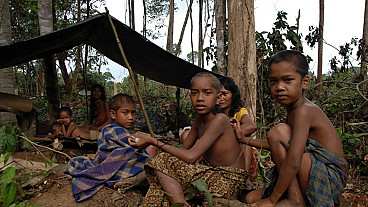
Bukit Dua Belas National Park (TNBD) in Jambi Province is a tropical forest area that is rich in biodiversity and home to the Suku Anak Dalam community, also known as Orang Rimba. This forest not only provides habitat for flora and fauna, but also a living space and livelihood for local communities who depend on natural resources to fulfill their daily needs. However, TNBD faces great challenges in preserving the forest and ecosystem. Activities such as wildlife poaching by irresponsible individuals, illegal logging, forest encroachment, and land conversion pose a serious threat to the sustainability of this forest.
In addition, the pressures of modernization and social change threaten the sustainability of Suku Anak Dalam's traditional culture and livelihoods. To address these challenges, various conservation and community empowerment initiatives have been implemented. One of these is the introduction of agroforestry techniques, which integrate agricultural practices with forest conservation. Through this approach, communities are encouraged to grow economically valuable crops such as rubber, coffee and medicinal plants under the shade of forest trees so as to increase income without damaging the forest ecosystem. The Suku Anak Dalam community was also provided with seedlings of multipurpose tree species (MPTS) and fruits including petai, jengkol, kabau as part of the ecosystem restoration program.
In addition, non-timber forest product-based economic empowerment programs have been developed. Communities are encouraged to manage and market products such as forest honey, rattan and handicrafts that have high selling value. This approach not only improves economic welfare, but also encourages forest conservation as communities have a direct incentive to preserve their natural resources. The role of Suku Anak Dalam in forest conservation is crucial. They have deep traditional knowledge of forest ecosystems and sustainable natural resource management practices.
However, marginalization and external pressures have threatened the survival of their culture and knowledge. Therefore, conservation efforts must respect and integrate the local wisdom of Suku Anak Dalam. One example of an initiative involving Suku Anak Dalam is a culture-based education program. This program integrates traditional knowledge with the formal curriculum so that the younger generation can understand the importance of forest conservation and their culture. In addition, skills training such as handicraft making and non-timber forest product processing is provided to improve their economic capacity. Collaboration between the Government, nongovernmental organizations, and local communities is essential in the TNBD conservation efforts.
Conservation initiativesVarious forest conservation programs have been implemented with various results that can be used as learning materials. One that is still in the process of implementation includes the BioCarbon Fund Initiative for Sustainable Forest Landscapes (BioCF ISFL) Program. This program is one example of an initiative that aims to reduce greenhouse gas emissions through forest protection and reforestation. The program is facilitated by a multilateral fund and supported by donor countries such as Germany, Norway, Switzerland, the United Kingdom, and the United States, managed by the World Bank. Its activities consist of three phases: preparation, pre-investment, and results-based payments.
The implementation of programs such as BioCF ISFL in TNBD involves various parties, including Forest Management Units (FMUs) and National Park Agencies. Pre-investment activities are focused in four FMUs, namely KPH Hilir Sarolangun, KPH Bungo, KPH Tanjung Jabung Barat, and KPH Merangin, as well as four National Park Councils, namely Kerinci Sebelat, Berbak Sembilang, Bukit Dua Belas, and Bukit Tiga Puluh National Parks, plus the Jambi KSDA Center. This program is not just an effort to conserve forests, but is also designed to have a real impact on the welfare of local communities. This initiative is a real step towards realizing sustainable forest management, while reducing carbon emissions and restoring threatened ecosystems.
The main objective of ISFL's BioCF program in Bukit Dua Belas National Park is to protect forests and restore damaged ecosystems, while at the same time creating economic opportunities for surrounding communities The implementation challenge faced at the beginning was how to change the mindset of communities who have been dependent on extractive forest use, such as logging or wildlife hunting. Of course, it takes time to build trust and educate them on the importance of preserving the forest. However, with the right approach, it can slowly build awareness that forest conservation and community economic improvement are not mutually exclusive, but can go hand in hand.
The program begins with efforts to involve the community in various forest restoration activities, such as tree planting, nursery construction, and forest patrols. Community involvement in each of these stages not only increases their sense of ownership of the program, but also opens up new opportunities for them to earn income from more sustainable activities. One of the main approaches in this program is the introduction of agroforestry techniques to the community. Agroforestry is a method that combines agriculture with forest management, allowing communities to utilize the land without destroying the forest. Forest farmer groups are strengthened and trained in environmentally friendly cultivation techniques. Through these techniques, communities can produce non-timber forest products such as forest honey, rattan and medicinal plants. These products not only have high economic value, but also help preserve the forest.
Active community participation is crucial to the success of this program. From the training provided, many of them are now starting to shift from practices that damage the forest to more sustainable activities. In terms of ecology, forest cover in the national park area is expected to be maintained, and forest destruction that was once a serious problem can now begin to be suppressed. One of the most expected indicators of success is the increase in biodiversity in the area. Some key species that were rarely seen before, such as tigers and siamangs, are expected to start inhabiting the Bukit Dua Belas National Park area again. This indicates that the ecosystem in this area is recovering and functioning again as an ideal habitat for various species.
In addition to the ecological impact, ISFL's BioCF program also has a significant economic impact on the surrounding community. Through the training and mentoring provided, the community now has a new source of income from non-timber forest products. One important innovation in this program is the establishment of a local cooperative that serves as a forum to facilitate the marketing of forest products. With this cooperative, communities not only have access to a wider market, but can also get better prices for their products. The success of conservation and community empowerment programs in TNBD cannot be separated from the support of various parties. Collaboration between the Government, non-governmental organizations, and local communities is key in preserving forests and improving community welfare. With a holistic and participatory approach, it is hoped that TNBD can become a model of sustainable forest management that respects local wisdom and provides benefits for all parties.
Cultural IdentityConservation efforts in TNBD also face the complexities of indigenous communities, including having to consider the social and cultural dynamics of Suku Anak Dalam. Research shows that their cultural identity is closely tied to the forest as a source of life and spirituality. Therefore, conservation programs must respect and integrate their cultural values, such as in marriage, birth, and death practices associated with local wisdom.
In addition, it is important to understand the history of marginalization experienced by Suku Anak Dalam, especially during the New Order era, where they experienced pressure to assimilate and lost access to their customary territories. Understanding this historical context is important for designing empowerment programs that are sensitive to their needs and aspirations.
In the long term, the sustainability of TNBD depends on a balance between environmental conservation and the socio-economic well-being of local communities. An approach that integrates conservation with economic empowerment, education and cultural preservation will ensure that forests remain sustainable and communities can enjoy their benefits on an ongoing basis. With a joint commitment from all parties, Bukit Dua Belas National Park can become a successful example of sustainable forest management that respects local wisdom and provides benefits for future generations.
*Head of Bukit Dua Belas National Park, Jambi.
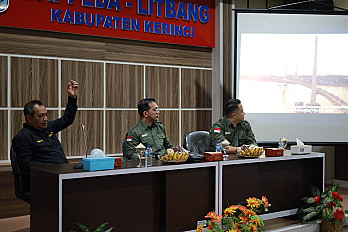
Jambi – Jambi Province has enormous potential to carry out emission reduction activities through forest and land management. Remembering that Jambi Province has 4 National Parks, as well as 29 traditional forests which are the largest forests in Indonesia plus Social Forestry areas spread across 10 KPHs.
Regarding the Bio Carbon Fund program, the Jambi Provincial Government through the Sub National Management Unit (SNPMU) is currently carrying out outreach activities to 10 regencies/cities to provide a general overview of patterns of determining and measuring emissions, determining and benefit distribution schemes and procedures for distributing benefits as well as safeguard functions and monitoring and evaluation standards that will be implemented in the management of benefit funds later.
And the implementation of activities within the scope of BioCF-ISFL is a form of Jambi Province's commitment to playing an active role in implementing emission reduction.
“The Jambi Provincial Government has committed and will continue to implement the concept
REDD+ in Jambi Province means reducing emissions from deforestation and forest degradation as well as increasing conservation and forest carbon reserves," emphasized the Head of Bappeda for Jambi Province, represented by the Head of the Economy and Natural Resources Division who is also the deputy chairman of SNPMU BioCF Dr.Ahmad Subhan. S.IP. M.Si today (7/10) at the opening of the BioCF-ISFL socialization event which was attended by officials from the Kerinci Regency Government.
Subhan further added that the Jambi provincial government has integrated the 2019-2045 Green Economic Growth Road Map with the Jambi Province RPJMD Planning Document.
Apart from that, it is also strengthened by the existence of Jambi Province regulations through Jambi Province Regional Regulation Number 4 of 2023 concerning the Green Economic Growth Plan which shows the strong commitment of the Governor of Jambi and the DPRD of Jambi Province.
So that the benefits of implementing REDD+ within the Green Economy framework can be felt by the entire community, Jambi Province is currently implementing the BioCF-ISFL program where through this program the target is to reduce emissions by 10 million tons of CO2 equivalent accompanied by Result Based Payment (RBP) or performance-based incentives reached 70 million USD.
Head of monitoring and evaluation at SNPMU Dharmawansyah SP. MM also appealed to all parties to support the implementation of activities within the scope of BioCF-ISFL.
"I hope for cooperation and support from all parties," stressed Wawan when delivering socialization material about monitoring and evaluation.
The Regent of Kerinci, who was represented by Assistant for Economics and Development H.Atmir, S.E, MM, in his speech emphasized that the Kerinci Regency really supports the Bio Carbon Fund activities and is ready to collaborate to reduce emissions by exploiting the potential of forests in the Kerinci Regency area.
"I hope that through this program the village communities around the forest can improve their welfare," explained Atmir after opening the BioCF RBP Phase Socialization event which was held in the hall of the Kerinci Regency BAPPEDA-Litbang office.
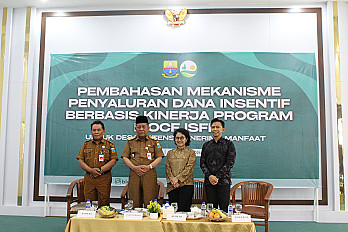
Jambi, 12 August 2024. Currently Jambi Province is preparing to download the Performance Based Incentive phase of the ISFL BioCF Program. One of the documents prepared is the Benefit Sharing Plan (BSP) which is currently in the process of being refined, especially regarding the mechanism for distributing funds for the BioCF-ISFL Program Performance-Based Incentives for Villages. Activities Discussion of the Mechanism for Distribution of Performance-Based Incentive Funds for the BioCF-ISFL Program for Villages Potential Beneficiaries, opened by the Deputy Governor of Jambi Province, Drs. H. Abdullah Sani, M.Pd.I
The Deputy Governor explained that we must always maintain our ecosystem and implement sustainable regional development. So the Jambi Provincial Government has made efforts and is committed to implementing the REDD+ concept in Jambi Province.“With our commitment to realizing Jambi's green economy through the implementation of REDD+ there is great hope that it will make a positive contribution to achieving the targets of green economic growth, inclusive development growth and evenly, creating a healthy ecosystem so that the target of reducing greenhouse gas emissions can be achieved and is able to overcome the impacts of climate change,” continued the Deputy Governor.
In his remarks and directions, the Deputy Governor also expressed his thanks and highest appreciation to all levels of the Ministry of Environment and Forestry (KLHK) of the Republic of Indonesia who have helped and supported the Jambi Provincial Government (Pemprov) in its efforts to support mitigation actions and climate change in Jambi Province.
The Deputy Governor also explained that in order to speed up the download of the RBP phase, the BioCF-ISFL Benefit Sharing Plan Document must immediately be finalized.
“One of the improvements to this document is the need to agree on the flow of funding mechanisms to the village level, so that suggestions and input from various parties are needed as well as support from the Regency/City Governments throughout Jambi Province, the Association of Indonesian Village Governments (APDESI) Regency/City throughout the Province Jambi and Village Assistance Coordinators throughout Jambi Province in determining the flow of performance-based incentive funding mechanisms for the Jambi Province BioCF-ISFL Program to Villages. "Hopefully the RBP phase will be implemented quickly so that the agreed RBP funds can be implemented by the community as an incentive to protect forest and land areas and ultimately improve the welfare of the community in Jambi Province."
Head of Bappeda Jambi Province, Ir. Agus Sunaryo, M.Si also as the Daily Chair of BioCF-ISFL said that the aim of implementing this activity was to increase the participation of parties in supporting the Jambi Province BioCF-ISFL Program both in the Pre-Investment phase and the RBP Phase. The agreed results of the activity ;Discussion of the Mechanism for Distribution of Performance Based Incentive Funds for the BioCF-ISFL Program to Potential Beneficiary Villages is as follows:
-
The Regency/City Government represented by the Head of the Community and Village Empowerment Service, as well as the Chair of the APDESI Regency/City in Jambi Province Supports the Bio Carbon Fund-Initiative for Sustainable Forest Landscape Program in Jambi Province, especially in the implementation stages Result Based Payment (Payment Based on Performance Results).
-
Regency/city governments that have agreed on the mechanism for distributing performance-based incentive funds to potential beneficiary villages through the Intermediary Institution scheme are Tebo, Muaro Jambi, Batanghari, Kerinci, Bungo and Merangin Regencies.
-
APDESI and the Regency/City Governments that have agreed on a mechanism for distributing performance-based incentive funds to potential beneficiary villages through Cash Transfers via BPDLH are West Tanjung Jabung Regency, Sarolangun and Sungai Banyak City.
-
APDESI and Village Assistance Workers who agreed on a mechanism for distributing performance-based incentive funds to potential beneficiary villages through Cash Transfer via BPDLH are APDESI Jambi, Batanghari, Muaro Jambi, Tebo, Merangin and Bungo Provinces.
-
APDESI and the Regency/City Government have agreed on a mechanism for distributing performance-based incentive funds to potential beneficiary villages through the Intermediary Institution scheme, namely East Tanjung Jabung Regency.
-
The results of the agreement are used to refine the Benefit Sharing Plan document and will be discussed at meetings at higher levels both at the Jambi Provincial Government and Central Government levels.
-thumb.jpg )
Tuesday, July 30, 2024
The Ministry of Environment and Forestry together with the Jambi Provincial Government are negotiating the ERPA draft with the World Bank. However, there is a Condition of Effectiveness (CoE) clause that needs to be fulfilled by the Indonesian Government, including Submission of copies of executed Sub-Project Arrangement(s) between Seller and the Sub-Project Entities required to implement the ISFL ER Program.
The form and content of this arrangement requires preparation and scrutiny which refers to applicable provisions, including: Minister of Home Affairs Regulation Number 22/2020, Minister of Home Affairs Regulation Number 25 of 2020, and Minister of Environment and Forestry Regulation Number: 3 of 2022 concerning Cooperation Domestic. The purpose of this meeting is to decide on the form of cooperation arrangement between the Ministry of Environment and Forestry and the Jambi Provincial Government on the Jambi Emission Reduction Project program.