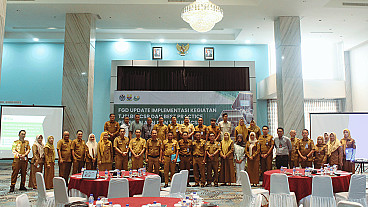
Jambi, 13 Oktober 2025 – Pemerintah Provinsi Jambi kembali menegaskan komitmennya dalam memperkuat peran Tanggung Jawab Sosial dan Lingkungan Badan Usaha (TJSLBU/CSR) sebagai instrumen strategis dalam mendukung pembangunan berkelanjutan dan penurunan emisi karbon. Komitmen tersebut mengemuka dalam kegiatan yang difasilitasi oleh Bappeda Provinsi Jambi, dengan melibatkan pemangku kepentingan dari tingkat pusat, provinsi, kabupaten/kota hingga sektor swasta.
Dalam sambutannyam Sekretaris Bappeda Provinsi Jambi menekankan pentingnya peningkatan partisipasi dunia usaha dalam menghasilkan Emission Reduction (ER) dalam kerangka program BioCF ISFL tahun 2025. Sejak memasuki fase Pre-Investment pada 2022, Provinsi Jambi telah mengalokasikan anggaran sebesar Rp82,38 miliar yang didukung oleh lima perangkat daerah,,, yakni Bappeda, Dinas Tanaman Pangan Hortikultura dan Peternakan (TPHP), Dinas Perkebunan, Dinas Lingkungan Hidup, dan Dinas Kehutanan.
Pertemuan tersebut secara khusus membahas implementasi program TJSLBU/CSR yang berkontribusi pada upaya penurunan emisi, sekaligus menampilkan berbagai praktik terbaik pengelolaan dana CSR di sejumlah daerah. Sinergi dan sinkronisasi antara pemerintah dan pelaku usaha menjadi fokus utama agar CSR tidak lagi bersifat sporadis, melainkan terintegrasi dalam perencanaan pembangunan daerah.
Kepala Dinas Sosial Dukcapil Provinsi Jambi yang diwakili Kepala Bidang Pemberdayaan Sosial menegaskan bahwa pihaknya memiliki peranh pembinaan, pengawasan, serta pengembangan kapasitas badan usaha dalam melaksanakan TJSLBU. Mengacu pada Permensos Nomor 9 Tahun 20220, setiap badan usaha diwajibkan melaporkan kegiatan CSR secara berkala kepada pemerintah, meliputi rincian program, alokasi anggaran, serta dokumentasi kegiatan.
Sepanjang 2024, sejumlah inisiatif berbasis CSR telah terealisasi, di antaranya perbaikan infrastruktur jalan dan pengadaan alat transportasi operasional dinas. Forum TJSLBU Provinsi Jambi juga tengah mengembangkan sistem berbasis web guna memperkuat basis data dan meningkatkan profesionalitas pengelolaan forum hingga 2027.
Dari tingkat kabupaten, Bappeda Kabupaten Tanjung Jabung Barat menyampaikan bahwa pelaksanaan TJSLP telah menjadi bagian dari strategi pembangunan daerah. Meski koordinasi belum sepenuhnya optimal, pemerintah daerah terus mendorong perusahaan untuk terlibat aktif melalui mekanisme Musrenbangdes hingga pengusulan program prioritas yang tidak terakomodasi dalam APBD.
Sementara itu, Bappeda Tanjung Jabung Timur menegaskan bahwa kebijakan CSR yang diatur dalam Perda Nomor 13 Tahun 2013 telah diarahkan untuk menjawab kebutuhan riil masyarakat. Fokus program mencakup penguatan ekonomi, sosial budaya, serta pembangunan infrastruktur desa.
Diskusi yang berlangsung mengemukakan sejumlah tantangan, terutama terkait pelaporan dan koordinasi dengan badan usaha. Beberapa daerah seperti Sarolangun dan Batanghari mengakui masih rendahnya kepatuhan pelaporan CSR. Sebagai solusi , Tanjung Jabung Barat menerapkan komunikasi intensif serta pemberian penghargaan tahunan kepada perusahaan aktif, sedangkan di Tanjung Jabung Timur pendekatan langsung kepala daerah kepada pimpinan perusahaan dinilai efektif meningkatkan partisipasi.
Sebagai tindak lanjut, Bappeda Provinsi Jambi berencana menyusun Peraturan Gubernur sebagai turunan dari Perda CSR Provinsi untuk mengatur mekanisme koordinasi, peran tim fasilitasi, dan sistem pelaporan terintegrasi. Dinas Sosial Provinsi Jambi juga akan memperkuat fungsi pemantauan dan evaluasi pelaksanaan CSR di kabupaten/kota agar selaras dengan regulasi nasional.
Memasui 2025, Pemprov Jambi menargetkan pemanfaatan dana CSR untuk dua sasaran utama, yakni penurunan emisi karbon dan peningkatan kesejahteraan sosial. Sebanyak 12 kategori kelompok masyarakat menjadi prioritas penerima manfaat, termasuk anak-anak rentan, lansia terlantar, penyandang disabilitas, korban bencana, fakir miskin, hingga komunitas adat terpencil.
Melalui penguatan regulasi dan kolaborasi lintas sektor, Pemerintah Provinsi Jambi berharap implementasi TJSLBU dapat menjadi contoh praktir CSR yang terintegrasi, inklusif, dan berkelanjutan di Indonesia.
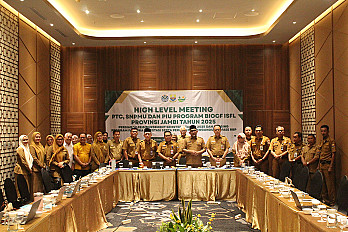
Jambi, October 2025 — The Jambi Provincial Government, through the Regional Development Planning Agency (Bappeda), together with various Regional Apparatus Organizations (OPDs) and supporting institutions, continues to accelerate the implementation of the BioCarbon Fund Initiative for Sustainable Forest Landscapes (BioCF-ISFL) program, which will reach a critical stage in 2025 and 2026. In a cross-sector coordination meeting involving various technical agencies and partners, the Head of the Jambi Provincial Bappeda, Ir. Agus Sunaryo, M.Si., emphasized the need for accelerated and synchronized steps between OPDs. "The 2025 implementation projection only runs until October. Several activities have not yet been implemented because they are still awaiting changes to the Regional Budget (APBD)," he said. He added that for 2026, implementation will only last until May, with the reimbursement process already underway in June. Furthermore, there is a significant discrepancy in the budget ceiling. The RKA document lists only IDR 4 billion, while coordination with the Ministry of Environment and Forestry and the World Bank indicates a potential ceiling of up to IDR 6 billion. "This requires follow-up in the form of a LEMTARA agreement and performance allocation," Agus emphasized.
Input from Technical OPDs: Field Challenges
A representative from the Environmental Agency (DLH), Adi, reported that monitoring and evaluation (monev) activities for safeguards presented a particular challenge. "Many activities were conducted in the field, while the use of budgets for vehicle rentals was a finding during the audit," he said. Furthermore, the DLH is also responsible for implementing customary territory recognition and public consultations involving various stakeholders. From the Forestry Agency's perspective, budget efficiency issues have led to shifts in official travel. Forest Management Units (KPH) also voiced concerns. "KPHs are afraid that once the program is underway, they won't be able to reimburse," said the agency representative. The Plantation Agency noted that the projected 2025 budget is approximately IDR 985 million, allocated for five priority activities. While the figure is not large, clarity and timeliness of implementation remain key concerns.
Regulatory Barriers and Administrative Solutions
According to Agus Sunardi of the Regional Revenue and Finance Management Agency (BPKPD), political dynamics at the Budget Agency (Banggar) level are one of the main obstacles. Nevertheless, he is optimistic that the APBD can be finalized on September 24, with ratification scheduled for September 26. "After ratification, the documents will be sent to the Ministry of Home Affairs three days later. We estimate that the revised budget can be executed between October 27-31," Agus explained. He also emphasized that the reimbursement process has a one-month deadline and that the verification process is expected to be completed by December. Regarding the issue of official vehicle use, the BPKPD reminded that based on the latest presidential regulation, only regional heads and heads of agencies are permitted to use rented vehicles for official activities. To avoid audit findings, efficient operational vehicle management among regional government agencies (OPDs) is recommended. Regarding the budget increase from IDR 4 billion to IDR 6 billion, Agus stated that the additional IDR 2 billion can be immediately distributed to technical SKPDs. "We will also strive to ensure that the DLH's findings are categorized as administrative findings, not serious violations," he added.
Recommendations and Strategic Steps
The coordination meeting also produced several important recommendations:
- The program application process from villages must go through the stages of allocation, activity proposal, verification, and approval by the province and the ministry.
- Criteria for Non-Governmental Organizations (NGOs) include domicile in the region, a minimum of 7 years of organizational age, and a minimum of 5 years of experience in the relevant field.
- The Provincial BSM Team has been formed and is currently updating the training module.
- SOPs related to benefits identification, risk mitigation, and LEMTARA selection have been developed.
- A draft Gubernatorial Regulation has been prepared and is being finalized.
- The technical team is also developing implementation guidelines (juklak) and technical guidelines (juknis).
- Validation of NGOs and universities is carried out to ensure credibility and avoid conflicts of interest.
- The preparation of the BSP documents, SOPs, operational guidelines, and technical guidelines needs to be expedited so they are ready before funds are transferred or the Emission Reduction Payment Agreement (ERPA) is signed.
- Recognition of customary territories through a Regent's Decree is a priority so that indigenous peoples' demands can be legally accommodated.
- Adjustment of official travel schedules between the central and regional governments needs to be considered for greater effectiveness and efficiency.
Given the various technical, administrative, and political challenges faced, cross-sector collaboration and accelerated decision-making are key to the successful implementation of the BioCF-ISFL program in Jambi Province. Commitment from all parties to aligning policies, budgets, and field implementation is essential to achieve maximum results in 2025 and 2026.
-thumb.jpg )
Jambi, September 3–4, 2025 — The Jambi Provincial Government, through the Regional Development Planning Agency (Bappeda), held a Coordination Meeting for the Preparation of the Phase I Emission Reduction Monitoring Report (ERMR) for the Jambi Emission Reduction Program (ERP) for the 2020–2022 period. This event served as a crucial opportunity to ensure Jambi Province's readiness to move towards results-based payments (RBP) through a collaborative mechanism with the World Bank.
Opening and Strategic Direction
The meeting was opened by Ir. H. Sepdinal, ME, representing the Head of Bappeda. In his remarks, he emphasized that the preparation of the ERMR is a strategic step in efforts to reduce greenhouse gas emissions in Jambi. The Phase I ERMR includes seven chapters and five appendices prepared by the MAR team with cross-sectoral contributions, including safeguards, monitoring and evaluation (M&E), the Benefit Sharing Mechanism (BSM), and other aspects.
BIOCF Program Progress and Pre-Investment
As of mid-2025, the BioCarbon Fund (BIOCF) program remains in the pre-investment phase, focusing on strengthening institutions and policies. Negotiations on the Emission Reduction Payment Agreement (ERPA) with the World Bank have been delayed due to updates to the environmental, social, and benefit sharing plan (BSP) documents. Despite this, budget realization has reached 77.2%, despite various operational challenges in the field.
Emissions Data Compilation and Consistency
During the discussion of the ERMR document, meeting participants highlighted the importance of data consistency with national sources such as SignSmart and IPSDH. Activity data, particularly from the agriculture and livestock sectors, is expected to be completed by 2024. The technical team emphasized that all land cover change data will be presented in Excel matrix format to facilitate the verification process and avoid data discrepancies.
Benefit Sharing Plan (BSP): Fairness for All Parties
The BSP preparation is now in the finalization stage. The benefit-sharing plan includes 57% based on performance, 1–1.5% for voluntary palm oil companies, and 5% for small-scale social forestry (PS) groups. The discussion also highlighted the determination of the intermediary institution (Lemtara) for benefit distribution, with three options: a local selection team under the Governor, a central agency, or the BPDLH.
The main challenges lie in the completeness of beneficiary data and field validation. To prevent overlap, the BSP recommends using a single safeguard document, which has been approved since 2022.
Safeguards and Integration of Supporting Documents
The Jambi emission reduction program implements two safeguard systems: the OPBP for free investment and the ISS for result-based payment. It was agreed that there was no need to create new documents, but rather to adapt existing guidelines. Synchronization between the BSP and safeguards is a priority to avoid implementation conflicts.
Carbon Trading and National Registration
The discussion also covered the carbon registration process in the National Registration System (SRN) and its integration with the World Bank's Carbon Asset Tracking System (CATS). All entities, including indigenous communities and NGOs like Warsi, are required to register with the SRN and obtain central government approval. The discussion highlighted the importance of regional regulatory readiness for an effective carbon trading mechanism.
Implementation and Coordination Challenges
Several challenges remain, ranging from limited microdata on carbon asset groups, changes in spatial planning policies, to cross-sectoral synchronization. The Jambi Provincial Government is committed to strengthening coordination and accelerating ERPA negotiations to support the sustainability of results-based payments.
Day Two: Deeper Understanding of Reversal Buffers, Safeguards, and Non-Carbon Benefits
Managing Reversal and Buffer Risks
The discussion on Thursday, September 4, 2025, focused on buffer mechanisms and reversal risks, referring to the 2023 SFL Buffer Requirement. Fifteen percent of total emission reductions will be allocated as a buffer account to anticipate the risk of emission reversals due to fires, floods, land tenure conflicts, or renewed deforestation.
Chapter 6 of the ERMR includes a risk assessment, buffer tool, and a narrative linking Annex 1 safeguards and non-carbon benefits (NCBs). Baseline data, actual emissions, and major events such as El Niño, peat fires, or permit conflicts are the main components of the report.
Safeguard Implementation and ESDD
In this session, Mr. Deddy presented the Environmental and Social Due Diligence (ESDD) assessment, which assesses the program's compliance with World Bank safeguard standards for the 2022–2024 period. The ESDD analysis covers environmental risks, working conditions, biodiversity conservation, and indigenous community involvement.
The Head of Safeguards, Linda, added that monitoring is conducted twice a year and will focus more on peatland management to prevent fires and emissions. Meanwhile, Sahru from the safeguards team reported that the ESDD document has been revised and is ready to be submitted to the World Bank.
Technical Discussion and Follow-up
Meeting participants provided various input, including the importance of assessing the impact of production forest utilization permits under 5 hectares, potential conflicts with national strategic projects, and the need to monitor forest rehabilitation and conservation activities.
It was also agreed upon the importance of regular cross-sectoral meetings to expedite the resolution of technical issues and coordination with central ministries.
Data Monitoring and Supporting Technology
The Monitoring and Evaluation (Monev) Team explained the development of an OCM (Online Collaboration Management) portal for real-time data collection by all sectors and beneficiaries. The use of drones by Forest Management Units (KPH) was also proposed to improve the accuracy of rehabilitation area monitoring. All data will be stored for a minimum of seven years, as stipulated in the cooperation agreement with the World Bank.
Social Forestry and Oil Palm Management
The meeting also discussed the incentive mechanism for oil palm owners under the social forestry scheme. KPHs were urged to conduct strict guidance to prevent land use violations after the PS Decree is issued.
The issue of "jangka benah" (long-term improvement) in oil palm plantations received special attention because it requires realistic and equitable solutions on the ground.
Non-Carbon Benefits: More Than Just Emissions
In addition to emission reductions, Jambi also emphasizes non-carbon benefits (NCBs) such as improved local livelihoods, transparent forest governance, and biodiversity conservation. Supporting data for NCBs will be collected by the Monitoring and Evaluation (M&E) team, supported by spatial imagery and field reports to ensure the accuracy of achievement claims.
Closing: Strengthening the Foundation for Results-Based Payments
The two-day coordination meeting resulted in several important agreements, ranging from data consistency to synchronization of ERMR, BSP, and safeguard documents. With cross-sector synergy and support from all stakeholders, Jambi Province affirms its commitment to becoming a model for implementing results-based emission reduction programs in Indonesia.
The agreed-upon steps are expected to form a strong foundation for the sustainability of the BIOCF program and accelerate the achievement of low-carbon development targets in Tanah Sepucuk Jambi Sembilan Lurah.
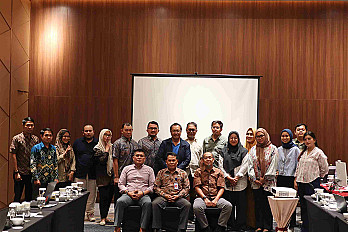
Jambi, September 1–2, 2025 — The IGRK MPV Directorate, together with the Monitoring, Assessment, and Reporting (MAR) Division of the BioCF-ISFL Jambi Province, held a two-day coordination meeting to discuss activity progress, system improvements, and capacity building to support the full implementation of the BioCF-ISFL Program in Jambi Province.
The meeting was attended by various stakeholders, including representatives from local governments, technical institutions, academics, and development partners. The meeting was divided into several sessions with topics including updates on IGRK & MAR progress, land cover map development, SOP revisions, the deforestation early detection system, and optimization of the BioCF ISFL Jambi information portal.
Strengthening the MAR System in the REDD+ Scheme
In the opening session, Agustina Kristin Handayani, S.T., presented the progress of IGRK & MAR activities under the BioCF-ISFL Program framework. She emphasized that MAR plays a crucial role in ensuring the accuracy of emissions data, monitoring interventions, and reporting on REDD+-based emission reduction achievements.
This program focuses on calculating emissions, strengthening the MRV (Measurement, Reporting, and Verification) system, and increasing transparency and accountability at the regional level. The steps leading to full implementation of the MAR system include preparation, trials, evaluation, and full implementation across all BioCF ISFL Jambi intervention areas.
"The progress of MAR implementation has proceeded according to plan, but acceleration is needed in terms of institutional strengthening and cross-agency data integration," she said. Support from both central and regional institutions is key to the successful implementation of the MAR system, which is planned to be implemented in stages until 2026.
Improving Land Cover Map Accuracy
Next, Tantri Janiatri, S.Hut., presented the progress of the documentation to improve the accuracy of the Jambi Province land cover map. The activity was carried out through three Quality Control (QC) stages in Bogor and Jambi between April and June 2025.
The validation process, which involved observing up to 100% of samples, successfully improved the accuracy of land cover data, reaching a consistency level of 99% in 2022. "This data is now suitable as a basis for low-emission development planning in Jambi," said Tantri.
The resulting documentation will serve as an important reference for the implementation of the BioCF ISFL and REDD+ programs. The next stage will involve the development of a more systematic documentation book with the support of the MAR and IPSDH teams.
MAR SOP Revision and Synchronization
In the next session, Dr. Asnelly Ridha Daulay, M.Nat.Res., Ecs., emphasized the need to revise and update the MAR Standard Operating Procedure (SOP). The revision aligns the carbon stock measurement method with the NFI version 2 developed by IPSDH.
He also emphasized the importance of documenting SOP implementation as evidence of field implementation and legalizing the document through a Regional Secretary's Decree to ensure formal validity for all relevant Regional Apparatus Organizations (OPDs).
Furthermore, the reporting frequency for monitoring activities, such as fire and deforestation observations, was agreed to be at least monthly, with daily hotspot monitoring during the dry season.
Timeline and Targets for the MAR Sector 2025–2026
Latifah, S.T., M.T., outlined the MAR sector's work plan for 2025–2026. The focus of activities in 2025 includes the full implementation of MAR, land cover data improvement (supported by the GCF), and strengthening the one map policy.
Ongoing activities include the preparation of the ERMR 1 document, RBP entity data, and fire early detection data. Improvements to the Standard Operating Procedures (SOP) and SRN reports are still in the preparation stage.
In addition, plot sampling activities to improve land cover data are scheduled for November 2025–January 2026.
Early Detection System for Deforestation and Degradation
The second day began with a presentation by Dio Wisnu Mulyanda, S.T., on the development of an Early Detection System for deforestation and degradation in Jambi. He explained the use of the Google Earth Engine platform and the integration of the GLAD-L (Landsat) and RADD (Radar Sentinel-1) systems to detect forest cover loss quickly and accurately.
The combination of these two systems enables high-confidence early warnings, even in tropical forested areas with thick cloud cover. Dio also introduced a Normalized Burn Ratio (NBR)-based fire detection system and the use of Avenza Maps for offline field navigation.
Optimizing the ISFL Jambi BioCF Portal
Muhammad Danial Husairi, S.Hut., and Alif Rahmat Julianda, S.Kom., presented the progress and development plans for the biocf.jambiprov.go.id portal. Since its development in 2022, the portal has served as a hub for BioCF data information and reporting, covering emissions, forest cover, intervention areas, and drivers of deforestation.
Although now operational, the portal still requires socialization and optimization. Data management is carried out through an Excel template with public, private, and root access to ensure data security and consistency.
Participants emphasized the importance of making the portal more user-friendly with a standardized map display, regular updates, and integration with the smart patrol system in the national park area.
Geospatial Data Availability and Needs
Dian Martiyosa, S.T., highlighted the importance of basic and thematic geospatial data availability to support emissions calculations and cross-sector integration. He explained that the BioCF ISFL requires accurate, up-to-date, and integrated data, covering administrative boundaries, forest cover, peat areas, and socio-economic data.
However, challenges remain, including differences in methodology, limited access to permit data, and a lack of uniformity in data scales across agencies. He recommended the development of an integrated geoportal, increased human resource capacity, and regular updates of thematic data.
Identifying Additional Needs and Follow-up
Wilya Eka Sari, SP., closed the session with a presentation on additional needs to support the program's sustainability. The agenda included the development of a MAR 2026 activity timeline, a carbon accounting study for REDD+ jurisdictions, finalization of the 2020–2022 land cover map accuracy book, and the appointment of a data portal PIC.
Respondents provided several recommendations, including strengthening human resource capacity, standardizing maps, establishing data sharing policies, and establishing internal public communication mechanisms before forwarding them to the national complaints system.
Conclusions and Recommendations
This coordination meeting resulted in several strategic agreements. Participants agreed to:
- Accelerate the full implementation of the MAR system.
- Improve standard operating procedures (SOPs) in accordance with the latest methods.
- Optimize the BioCF portal as a means of transparency and digital reporting.
- Improve cross-sector coordination and geospatial data integration.
- Ensure program sustainability through increased human resource capacity and sustainable funding.
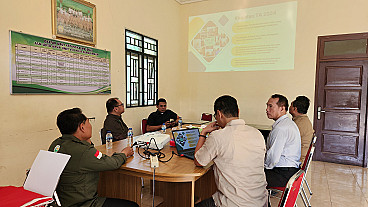
Sarolangun – Monitoring and Oversight of the Preparations for the 2024–2025 BioCF ISFL Program at the Sarolangun Hilir UPTD-KPHP (Field Management Unit) was conducted to ensure the program's readiness and performance were running according to plan. This monitoring also aimed to ensure that goods and services from the Jambi Province BioCF ISFL Program were on target and to identify any obstacles in the field.
One of the highlighted activities was the implementation of the Agroforestry Field School in Sungai Merah Village in Fiscal Year 2024. This program is part of the implementation of the Jambi Province BioCF ISFL program to increase community capacity in sustainable land management.
The Field School was designed to improve community knowledge and skills in agroforestry-based land management. The primary motivation for participants in this activity was the hope of improving their standard of living, both in terms of increased insight and the potential for economic income through long-term plant management.
During its implementation, the Field School program has successfully established a 3-hectare agroforestry demonstration plot. The cultivated crops include long-term commodities such as durian and mango. Because these are perennial crops, increased incomes will not be immediately apparent.
Nevertheless, the community has demonstrated its commitment to continuing to manage the land and crops. Consistency and commitment from group members are required for at least the next five years to achieve optimal results and to enjoy them together.
Overall, the Agroforestry Field School program in Sungai Merah Village for the 2024 Fiscal Year was successfully implemented. This program is considered successful in broadening the community's understanding of the importance of long-term land management as an investment for the future.
Going forward, support in the form of ongoing technical assistance, advanced training, and the provision of land management facilities and infrastructure is essential to ensure optimal and sustainable agroforestry management. This program is expected to be the first step towards improving the welfare of the Sungai Merah Village community in the future.
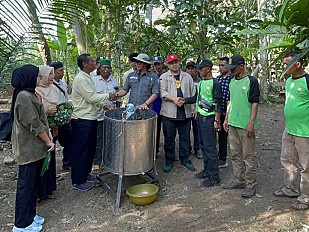
Pada Tahun Anggaran 2025, Desa Pemaatang Kulim menjadi salah satu desa yang mendapatkan dukungan dalam kegiatan pengembangan bisnis melalui program setup lebah madu. Program ini dilaksanakan bersama Kelompok Tani Hutan (KTH) Pematang Kulim dengan tujuan utama meningkatkan kemampuan kelompok dalam beternak lebah, menghasilkan madu berkualitas, serta membuka peluang usaha baru yang dapat menambah pendapatan masyarakat desa.
Melalui kegiatan ini, anggota KTH Pematang Kulim memperoleh pengetahuan dan keterampilan praktis mengenai budidaya lebah madu, mulai dari cara pemberian pakan, perawatan koloni, hingga teknik pemanenan yang tepat. Pelatihan ini tidak hanya memperkuat kapasitas individu anggota, tetapi juga menumbuhkan kesadaran akan pentingnya pemanfaatan potensi alam desa secara berkelanjutan.
Dalam pelaksanaannya, KTH Pematang Kulim telah aktif mengikuti berbagai pelatihan menganai cara merawat lebah dan memanen madu. Saat ini, kondisi koloni lebah tergolong cukup baik, meskipun terdapat beberapa koloni yang kabur sehingga sedikit mengurangi jumlah produksi. Kendati demikian, kelompok tetap berupaya menjaga kestabilan koloni agar hasil panen dapat meningkat dari waktu ke waktu.
Hasil panen madu saat ini sudah bisa dilakukan setiap 15 hari sekali, namun produksinya masih tergolong sedikit dan belum dijual secara rutin. Untuk mendukung aspek pemasaran, kelompok telah menjalin kerja sama dengan beberapa Usaha Mikro Kecil (UMK) di sekitar wilayah desa, yang telah disetujui dan siap membantu distribusi produk madu ketika produksi sudah stabil.
Dari sisi kelembagaan, anggota KTH Pematang Kulim menunjukkan komitmen dan kerja sama yang baik. Tugas dan tanggung jawab telah dibagi secara jelas-mulai dari perawatan lebah, pemberian pakan, proses panen, hingga pemasaran hasil madu. Pembagian tugas yang teratu ini menjadi salah satu faktor penting dalam menjaga keberlanjutan usaha,
Secara keseluruhan, kegiatan pengembangan bisnis setup lebah madu di Desa Pematang Kulim telah memberikan dampak positif bagi kelompok dan masyarakat. Pengetahuan dan keterampilan dalam beternak lebah semakin meningkat, kerja sama pemasaran telah terbangun, dan produksi madu mulai berjalan meskipun masih terbatas. Dengan adanya dukungan berkelanjutan dan semangat gotong royong anggota kelompok, usaha lebah madu ini berpotensi tumbuh menjadi sumber pendapatan yang berkelanjutan dan menjadi contoh sukses bagi desa-desa lain dalam mengembangkan potensi lokal secara mandiri dan ramah lingkungan.
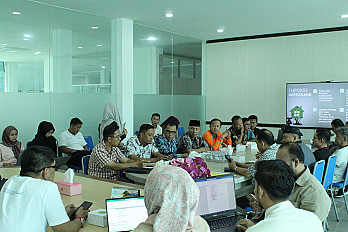
Jambi – Jambi Province has become one of the recipients of the BioCarbon Fund Initiative for Sustainable Forest Landscapes (BioCF ISFL) grant from the World Bank, following East Kalimantan. This program aims to support landscape-based emission reduction, forest conservation, and improve the welfare of communities surrounding forest areas.
The Head of the SNPMU BioCF ISFL Jambi Province, Ir. H. Sepdinal, M.E., stated that all legal entities operating in forest areas have the opportunity to receive performance-based funding or Result-Based Payment (RBP). However, the involvement of Remote Indigenous Communities (KAT) remains hampered by the lack of formal legality.
According to Sepdinal, KATs that do not have a Decree (SK) from the local government cannot receive funds directly. Therefore, KATs located in forest areas must collaborate with area managers such as Forest Management Units (KPH) or National Parks (TN) to receive facilitation and guidance.
Meanwhile, Yunasri Basri from the BioCF Safeguards Division of the Jambi Province ISFL explained that the implementation of the BioCF program must adhere to the World Bank's Environmental and Social Standards, including the protection of indigenous communities, biodiversity conservation, and the preservation of cultural heritage.
For Indigenous Peoples (KAT), program implementation is guided by Ministerial Regulation No. 9 of 2012 and Ministerial Regulation No. 12 of 2015, which divides KAT into three categories based on lifestyle and level of social interaction. However, challenges in the field include limited data and a lack of clarity regarding management areas.
Data from districts and cities show the diverse conditions of KAT. In Merangin Regency, there are 13 SAD groups with 1,267 people, while in Sarolangun there are 507 KAT families, most of whom have settled and have population data.
In Tebo Regency, 1,146 KAT people are spread across nine villages, including the settled Talang Mamak Tribe. Sungai Penuh City and Kerinci Regency are still in the data clarification stage because some indigenous people live around Kerinci Seblat National Park.
In this coordination, it was agreed that the Social Services Agency would be the primary data custodian for the KAT (Village-based Indigenous Peoples) in each region. The district/city Social Services Agency is responsible for field data collection, while the Jambi Provincial Social Services Agency will coordinate the overall data collection.
Going forward, the regional government, along with stakeholders, will update and validate the KAT data, involving the Forest Management Unit (FMU) and national park managers. This step is expected to ensure that KAT in Jambi Province receive the benefits of the BioCF program fairly, sustainably, and with social justice.
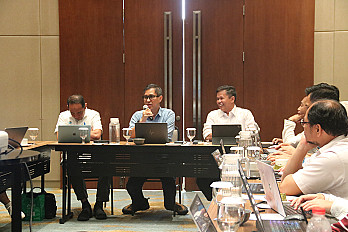
Tangerang, 12 June 2025 - The commitment of Jambi Province in climate action has now entered an important milestone with the completion of the Environmental and Social Due Diligence (ESDD) document for the Jambi Emission Reduction Program (JERP). This document serves as one of the main prerequisites for the Ministry of Environment, Ministry of Forestry, and the Provincial Government of Jambi to access result-based payments (Result-Based Payment/RBP) from the World Bank through the BioCarbon Fund (BioCF) scheme in the Jambi Emission Reduction Program (JERP). Furthermore, this document emphasizes that efforts to reduce carbon emissions in Jambi Province are carried out fairly, transparently, and responsibly concerning social and environmental aspects.
ESDD is not just about emission numbers—it speaks of forests, indigenous communities, small farmers, and the ecological future in Jambi that is sustainable. This document is not merely an administrative requirement. It becomes proof of the province's responsibility towards social and environmental risks, as well as an important stepping stone towards a fair green transition.Thus, the results of the discussion that finalize the draft ESDD document were held in Tangerang, June 11-12. The preparation was carried out by the Jambi local government, the national and subnational Safeguard Team, as well as independent consultants. This activity was also attended by the Director of Climate Change Mitigation of the Ministry of Environment and Forestry, accompanied by the Director of Resource Mobilization for Climate Change Control, and the Chair of the Subnational Project Management Unit (PMU) Jambi.
What is ESDD and What is its Function?
Environmental and Social Due Diligence (ESDD) is an assessment document aimed at evaluating the compatibility of emissions reduction program implementation with environmental and social protection standards. This document serves to: (1) assess compliance with the Environmental and Social Management Framework (ESMF) and the 10 World Bank safeguard standards (ESS1–ESS10), (2) measure the effectiveness of risk management in the field, (3) identify systemic gaps in program implementation, and (4) determine readiness to receive results-based payments (RBP). ESDD is an important tool to ensure accountability, transparency, and inclusiveness in the climate agenda.
Process of Preparing ESDD Documents
The preparation of the ESDD JERP document has gone through a series of technical and consultative stages, starting from the initial meeting on March 18–19, 2025, which was then reinforced in follow-up sessions on May 14–15, 2025. This process involves stakeholders from various sectors at the national, provincial, and local levels.
This due diligence is not for administrative compliance but is a form of accountability of the Indonesian Government towards the social and environmental impacts arising from the JERP. Therefore, this activity needs to carefully sift through activity data and select 14 sampling activities that represent the overall approach.
This document is prepared based on three main components of the JERP Program outlined in the Emission Reduction Program Document (ERPD), namely: strengthening institutional frameworks and governance policies for forest/land; sustainable forest and land management and strengthening low-emission value chains; and program coordination, safeguard reporting, and grievance redress systems (FGRM). Evaluation of these three components is conducted through a retrospective approach, which includes document reviews, electronic surveys, thematic discussions, and consultations with over 4,300 stakeholders across 11 districts/cities in Jambi Province.
Each component is evaluated based on five main aspects: environmental and social risk management processes, approval mechanisms, stakeholder engagement, budget allocation, and information transparency.
Safeguard Instruments, FPIC, and FGRM
ESDD is also equipped with a Feedback and Grievance Redress Mechanism (FGRM) that allows the community, especially vulnerable groups, women, and indigenous communities, to express complaints transparently and safely. This FGRM becomes an important instrument in ensuring that the principle of Free, Prior, and Informed Consent (FPIC) is implemented comprehensively.
The implementation of FPIC has been carried out in 230 villages spread across 10 districts/cities in Jambi Province during the 2022–2024 period, and it serves as an important foundation for the recognition of indigenous people's rights.
In terms of conservation, monitoring activities in areas of high conservation value (High Conservation Value/HCV) have been carried out through regular patrols and the installation of camera traps. Moving forward, these activities will be strengthened into a more effective and structured long-term monitoring system.
It is very important to see ESDD as an instrument for improvement, not just evaluation.
We cannot discuss climate success without addressing social justice. ESDD exists as a guarantor that no party will be sacrificed in the decarbonization agenda.
Strengthening REDD+ Synergy and Green Growth in Jambi
As part of the national REDD+ architecture, the implementation of the Joint Emission Reduction Program (JERP) demonstrates how a jurisdiction-based approach can have a real impact if supported by solid institutions and meaningful community involvement. This program also shows that strong safeguard mechanisms are not only important to meet donor requirements, but also serve as an essential tool to build trust between the government, indigenous communities, and development partners.
On the one hand, the Jambi Environmental Restoration Program (JERP) is also in line with the low-carbon development direction of Jambi Province, which has been outlined in the Green Growth Plan (GGP). The collaboration between local government, international partners, and local actors in the implementation of JERP strengthens the position of GGP as a sustainable development framework at the provincial level. With this synergy, Jambi is not only striving for emission targets but also ensuring that economic development and environmental protection can go hand in hand.
Editorial Note
The finalization of ESDD in Jambi Province marks not just an administrative milestone, but also substantial progress in the implementation of REDD+ safeguard principles in Indonesia. This document reflects how global climate policies can be concretely and operationally translated at the subnational level — by placing the rights of indigenous peoples, the involvement of vulnerable groups, and participatory governance as core foundations.
This success becomes a national learning model that demonstrates that carbon emission reduction programs are not just about numbers, but about ensuring social and environmental sustainability in a balanced way. With an operational grievance mechanism, strengthened legal recognition of customary rights, and the active role of local stakeholders, Jambi has now become one of the most tangible examples of how social justice can be at the heart of climate action. This is a form of green transition that is not only effective but also just.
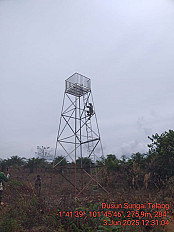
Sungai Telang Hamlet, Bathin III Ulu District, has become a strategic point in forest and land fire (karhutla) prevention efforts through the construction of a Fire Tower in the 2023 Fiscal Year by the Bungo Forestry and Forestry Ministry (KPHP). Based on field observations, the fire tower is currently in good condition and suitable for monitoring.
The fire tower plays a crucial role in the early detection system for forest fires. Initial hotspots are detected through satellite imagery. However, the satellite's location often requires field verification. The presence of the fire tower helps monitoring teams visually identify hotspot locations from a height, allowing for more accurate fire positioning and a faster response.
The monitoring procedure begins with satellite-based hotspot information, which is then verified directly through observations from the tower. With a visibility radius of approximately 15 kilometers, the tower, built in a hilly area, can cover production forest areas, the Rantau Bayur area, and parts of Kerinci Seblat National Park. This location is considered highly strategic because it provides extensive surveillance coverage of fire-prone areas.
Before the tower was built, officers relied primarily on reports from villagers to identify hotspots. A monitoring tower was also built in the Bukit Terima HTI area, Bungo Regency, but it is currently in a state of disrepair and is no longer actively used.
Field patrols are conducted by teams of 3–5 people per group. This team also involves Fire-Aware Communities (MPA) from surrounding villages. Community participation is considered a key factor in supporting effective fire monitoring and prevention in the area.
However, a major obstacle that still requires attention is the condition of the access road to the tower, which is severely damaged. This damage is caused by heavy vehicle traffic and sticky soil conditions during the rainy season. Furthermore, illegal mining activities in the river area near the tower are suspected of worsening the road condition.
Currently, the fire tower is actively used, especially during the dry season, as part of early forest and land fire prevention efforts. Overall, the fire tower in Sungai Telang Hamlet has proven to be functional and effective in supporting the forest fire monitoring system. However, improving road access is an important task to ensure that monitoring operations can run optimally and sustainably.
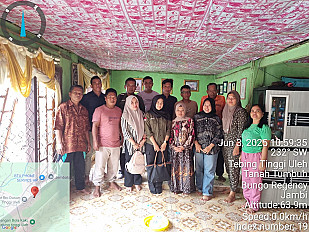
Tebing Tinggi Uleh Village, Tanah Tumbuh District, was the location for the 2024 Post-Harvest Technical Guidance (Bimtek) for Fiscal Year 2024, facilitated by the Food Crops, Horticulture, and Plantation Service (DTPHP). This activity focused on increasing the capacity of farmer groups in managing rice harvests to ensure they are more organized, efficient, and provide better economic value.
Currently, the rice storage system is still carried out independently in the homes of each farmer group member. The variety being cultivated is Afari rice, with a planting cycle from seed to harvest lasting approximately 3 months and 10 days. Although cultivation practices have been quite successful, post-harvest management was previously rudimentary and not yet standardized.
In a discussion session with resource persons, the farmer groups conveyed several challenges they still face in the field. Limited storage facilities are a major issue, preventing collective harvest management. Furthermore, the lack of vehicles for transporting harvests, such as three-wheeled motorcycles, complicates the distribution process from fields to storage sites and to buyers. This group also does not have a rice huller, so the processing of unhusked rice into rice still depends on other parties.
Nevertheless, the implementation of the Technical Guidance (Bimtek) has had a significant positive impact. Farmer group members acknowledged that after participating in the training, their storage and post-harvest management systems have become more organized. More careful handling of unhusked rice to maintain quality has resulted in improved yields. New knowledge regarding drying, storage, and harvest management techniques is considered very helpful in minimizing yield losses and maintaining stable selling prices.
In terms of productivity, the farmer group in Tebing Tinggi Uleh Village manages 20 hectares of land, divided proportionally among its members. Each hectare can produce approximately 6–7 tons of rice per harvest. Harvests are held twice a year, in June and December. The harvest is sold as unhusked rice at an average price of around Rp6,500 per kilogram, and the management is carried out directly by each member.
With these achievements, rice productivity in this region is considered quite high and has the potential to continue increasing if supported by adequate facilities and infrastructure.
As a follow-up, the farmer group hopes for the continuation of the Technical Guidance program in the coming years, including support for agricultural production facilities. For 2025, the group has received an allocation of 4 quintals of seeds from the relevant agency and received uniforms as part of the Technical Guidance activities. This assistance is expected to further motivate group members to improve performance and strengthen farmer institutions.
Through synergy between the local government and the farmer group, it is hoped that the post-harvest management system in Tebing Tinggi Uleh Village can continue to develop, thereby improving farmer welfare and strengthening regional food security.