News
479
Jambi Promotes Low-Carbon Development Through BioCF–ISFL Program, Targeting Emission Reduction of Up to 10 Million Tons of CO₂e


Portal BIOCF
Tuesday, 18 November 2025 Post 12:11 AM
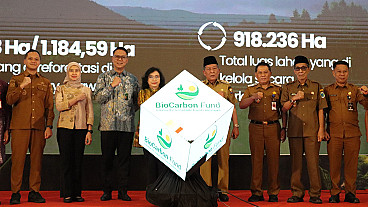
Jambi – The province of Jambi is one of the provinces in Indonesia that has successfully integrated a low-emission development approach with policies on the economic value of carbon in the planning and implementation of sustainable development through the BioCF-ISFL Project.
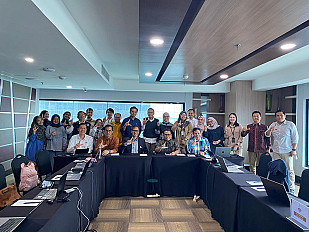
The success of Jambi Province has inspired and motivated the Central Kalimantan Province Working Group on Reducing Emissions from Deforestation and Forest Degradation Plus (REDD+) to commit to strengthening and implementing sustainable development policies in Central Kalimantan Province in order to achieve GHG emission reduction targets and utilize the economic value of carbon. The Jambi Provincial Government has affirmed its commitment to reducing greenhouse gas emissions through the implementation of the BioCF-ISFL Program, which runs from 2022 to 2025. The program, which is supported by a grant from the World Bank, targets a reduction in emissions of up to 10 million tons of CO2e.
The Head of the Provincial Development Planning Agency (Bappeda) of Jambi Province, Ir. Agus Sunaryo, M.Si, explained that Jambi Province has a forest area of 2.12 million hectares based on Decree of the Minister of Environment and Forestry No. 6613 of 2021. This area includes conservation forests, protected forests, and production forests, as well as four national parks, namely Kerinci Seblat, Bukit Dua Belas, Bukit Tigapuluh, and Berbak. The diversity of ecosystems—ranging from mountains, lowlands, to coasts and seas—makes Jambi one of the regions with the most complete ecosystems in Sumatra.
KPH Intervention and Sustainable Forest Management
In the BioCF program, several Forest Management Units (KPH) were designated as intervention areas, including KPHP Bungo, Merangin, Tanjung Jabung Barat, and Hilir Sarolangun.
The Jambi Provincial Forestry Service, through H. Andri Yushar Andria, S.Hut., M.Si, outlined a number of key activities that have been carried out, including routine forest patrols to prevent illegal logging, forest fire patrols and training for the Fire Awareness Community (MPA), rehabilitation of 1,665 hectares of peatland and agroforestry, and facilitation of institutional strengthening for 68 forest farmer groups. Conflict management also showed significant improvement, with the number of mediations decreasing from 45 cases (2002) to 14 cases (2024). In addition, 47 Fire Awareness Groups have been formed in peatland areas to date.
Safeguarding REDD+ and the Role of Indigenous Peoples
In another presentation session, Yunasri Basri, S.Pt., M.Si explained the implementation of REDD+ safeguards in Jambi as an effort to minimize negative impacts and increase positive impacts on communities. The structure of safeguards in Jambi Province is coordinated by SNPMU Bappeda, covering the areas of Safeguards, BSM, MAR, Monev, and the Secretariat.
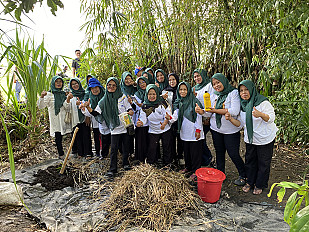
Safeguards emphasize aspects of governance transparency, community participation, respect for indigenous peoples' rights (MHA), biodiversity conservation, and prevention of emissions leakage. Every activity must be accompanied by environmental documentation, including terms of reference for meetings or training activities. MHA assistance is carried out in collaboration with three NGO groups: conflict resolution, environmental preservation (WALHI & WARSI), and formal assistance for MHA recognition. Indigenous peoples are also one of the beneficiaries of the Result Based Payment (RBP) stage, in accordance with their contribution to protecting indigenous territories. In terms of GESI (Gender Equality & Social Inclusion), every FPIC process requires the presence of at least five women, and there is a specific program to increase women's capacity in REDD+ activities.
Kerangka MAR dan Penghitungan Emisi
The Head of SNPMU, Ir. H. Sepdinal, ME, emphasized that the Monitoring, Analysis, and Reporting (MAR) system is the main foundation for calculating emissions. The MAR division, which was formed based on Governor's Decree No. 150/2022, is tasked with monitoring changes in land cover, calculating GHG emissions, determining baselines, and reporting emission reductions to the National Registry System (SRN).
The MAR system processes land cover data from 2006 to 2025, monitors fires, and analyzes uncertainty using the Monte Carlo method. The results of MAR are then submitted to the KPH and field units for early mitigation of deforestation and fires.
Funding, Reporting, and Benefit Distribution
Program contact person, Risti Putri, M.Ec.Dev added that BioCF funding comes from the Regional Budget (APBD) and the Environmental Fund Agency (Lemtara). Three types of reports must be submitted: activity performance reports, results-based emission reduction reports, and environmental and social reports. The Benefit Sharing Mechanism (BSM) scheme will distribute funds to the government, KPH, villages, farmer groups, companies, social forestry, and indigenous peoples.
Penyelesaian Konflik Lahan
At the end of the discussion, the Forestry Service emphasized that land conflicts are complex issues that cannot be resolved quickly. Conflicts generally arise between communities and license holders, particularly regarding boundaries and land use. Resolution is achieved through regulation, the FGRM mechanism, multi-stakeholder mediation, and transparent governance.
Conclusion
The BioCF-ISFL program has strengthened institutional capacity, forest governance, and community participation in environmental conservation. With support from various parties—the government, indigenous peoples, NGOs, academics, and village communities—the province of Jambi is optimistic that it can achieve its emission reduction targets while improving the welfare of communities in forest areas. This program is not only an instrument for climate change mitigation, but also promotes more inclusive, equitable, and sustainable forest governance for the future of Jambi.
The success of Jambi Province has inspired and motivated the Central Kalimantan Province Working Group on Reducing Emissions from Deforestation and Forest Degradation Plus (REDD+) to commit to strengthening and implementing sustainable development policies in Central Kalimantan Province in order to achieve GHG emission reduction targets and utilize the economic value of carbon. The Jambi Provincial Government has affirmed its commitment to reducing greenhouse gas emissions through the implementation of the BioCF-ISFL Program, which runs from 2022 to 2025. The program, which is supported by a grant from the World Bank, targets a reduction in emissions of up to 10 million tons of CO2e.
The Head of the Provincial Development Planning Agency (Bappeda) of Jambi Province, Ir. Agus Sunaryo, M.Si, explained that Jambi Province has a forest area of 2.12 million hectares based on Decree of the Minister of Environment and Forestry No. 6613 of 2021. This area includes conservation forests, protected forests, and production forests, as well as four national parks, namely Kerinci Seblat, Bukit Dua Belas, Bukit Tigapuluh, and Berbak. The diversity of ecosystems—ranging from mountains, lowlands, to coasts and seas—makes Jambi one of the regions with the most complete ecosystems in Sumatra.
KPH Intervention and Sustainable Forest Management
In the BioCF program, several Forest Management Units (KPH) were designated as intervention areas, including KPHP Bungo, Merangin, Tanjung Jabung Barat, and Hilir Sarolangun.
The Jambi Provincial Forestry Service, through H. Andri Yushar Andria, S.Hut., M.Si, outlined a number of key activities that have been carried out, including routine forest patrols to prevent illegal logging, forest fire patrols and training for the Fire Awareness Community (MPA), rehabilitation of 1,665 hectares of peatland and agroforestry, and facilitation of institutional strengthening for 68 forest farmer groups. Conflict management also showed significant improvement, with the number of mediations decreasing from 45 cases (2002) to 14 cases (2024). In addition, 47 Fire Awareness Groups have been formed in peatland areas to date.
Safeguarding REDD+ and the Role of Indigenous Peoples
In another presentation session, Yunasri Basri, S.Pt., M.Si explained the implementation of REDD+ safeguards in Jambi as an effort to minimize negative impacts and increase positive impacts on communities. The structure of safeguards in Jambi Province is coordinated by SNPMU Bappeda, covering the areas of Safeguards, BSM, MAR, Monev, and the Secretariat.
Safeguards emphasize aspects of governance transparency, community participation, respect for indigenous peoples' rights (MHA), biodiversity conservation, and prevention of emissions leakage. Every activity must be accompanied by environmental documentation, including terms of reference for meetings or training activities. MHA assistance is carried out in collaboration with three NGO groups: conflict resolution, environmental preservation (WALHI & WARSI), and formal assistance for MHA recognition. Indigenous peoples are also one of the beneficiaries of the Result Based Payment (RBP) stage, in accordance with their contribution to protecting indigenous territories. In terms of GESI (Gender Equality & Social Inclusion), every FPIC process requires the presence of at least five women, and there is a specific program to increase women's capacity in REDD+ activities.
Kerangka MAR dan Penghitungan Emisi
The Head of SNPMU, Ir. H. Sepdinal, ME, emphasized that the Monitoring, Analysis, and Reporting (MAR) system is the main foundation for calculating emissions. The MAR division, which was formed based on Governor's Decree No. 150/2022, is tasked with monitoring changes in land cover, calculating GHG emissions, determining baselines, and reporting emission reductions to the National Registry System (SRN).
The MAR system processes land cover data from 2006 to 2025, monitors fires, and analyzes uncertainty using the Monte Carlo method. The results of MAR are then submitted to the KPH and field units for early mitigation of deforestation and fires.
Funding, Reporting, and Benefit Distribution
Program contact person, Risti Putri, M.Ec.Dev added that BioCF funding comes from the Regional Budget (APBD) and the Environmental Fund Agency (Lemtara). Three types of reports must be submitted: activity performance reports, results-based emission reduction reports, and environmental and social reports. The Benefit Sharing Mechanism (BSM) scheme will distribute funds to the government, KPH, villages, farmer groups, companies, social forestry, and indigenous peoples.
Penyelesaian Konflik Lahan
At the end of the discussion, the Forestry Service emphasized that land conflicts are complex issues that cannot be resolved quickly. Conflicts generally arise between communities and license holders, particularly regarding boundaries and land use. Resolution is achieved through regulation, the FGRM mechanism, multi-stakeholder mediation, and transparent governance.
Conclusion
The BioCF-ISFL program has strengthened institutional capacity, forest governance, and community participation in environmental conservation. With support from various parties—the government, indigenous peoples, NGOs, academics, and village communities—the province of Jambi is optimistic that it can achieve its emission reduction targets while improving the welfare of communities in forest areas. This program is not only an instrument for climate change mitigation, but also promotes more inclusive, equitable, and sustainable forest governance for the future of Jambi.
Latest News
-thumb.jpg)