News
281
Forestry-Based Empowerment Program Promotes Welfare and Environmental Sustainability in Three Villages
Portal BIOCF
Thursday, 27 November 2025 Post 12:11 AM
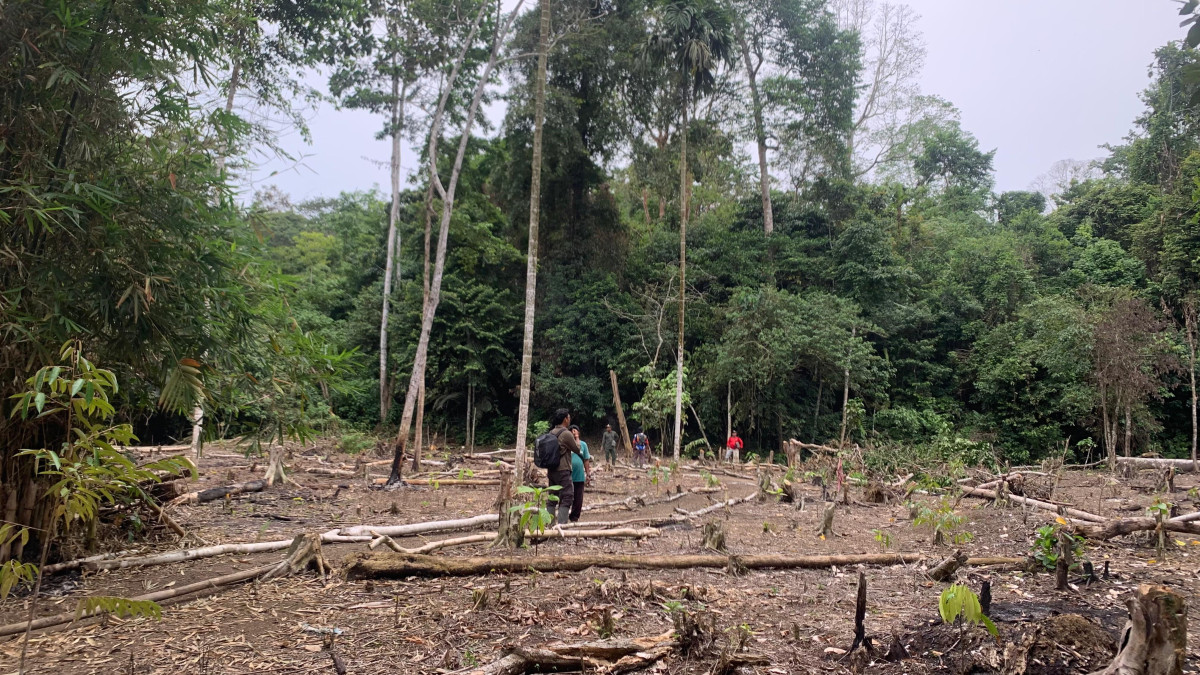
Forestry and environmental community empowerment efforts implemented in Sungai Merah Village, Pematang Kolim Village, and Pematang Kabau Village have shown positive results in increasing community capacity while maintaining the sustainability of natural resources. The program, implemented in the 2024 and 2025 fiscal years, includes Agroforestry Field School activities, honey bee business development, and ecosystem restoration in the Bukit Dua Belas National Park (TNBD) area.
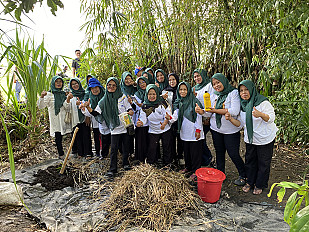
In Sungai Merah Village, the Agroforestry Field School program in 2024 provided a means to enhance community knowledge and skills in sustainable land management. This program established a 3-hectare agroforestry demonstration plot with long-term crops such as durian and mango. Although economic benefits are not immediately apparent due to the long growth time of these crops, the program has successfully raised community awareness of the importance of long-term land management. The program is expected to become a future investment, improving community well-being through technical assistance and sustainable management.
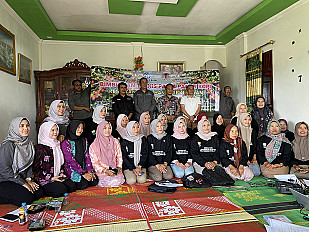
Meanwhile, in Pematang Kolim Village, the Pematang Kolim Forest Farmers Group (KTH) received business development assistance in the form of honey bee setup assistance in the 2025 fiscal year. This activity aims to open new business opportunities through honey bee culture. Group members have received training ranging from bee virginity, feeding, to honey harvesting techniques. Currently, honey harvests can be carried out every 25 days, although the production volume is still limited due to some bee colonies escaping. To support marketing, the group has collaborated with local Micro, Small, and Medium Enterprises (MSMEs). From an institutional perspective, the division of tasks among members has been running well, demonstrating the group's commitment to developing a sustainable honey business.
In Pematang Kabau Village, activities are focused on ecosystem restoration in the Bukit Dua Belas National Park area through a collaboration between the national park and KTH Lestari. Established in 2013, the group has 23 members and is led by Slamet Riyadi. In its implementation, KTH Lestari plays an active role not only in replanting but also in independent seedling production. The method used is species enrichment planting by planting local species such as durian, avocado, jengkol, and rambutan. This activity aims to increase biodiversity while providing potential long-term economic benefits for the surrounding community.
Overall, the implementation of these three programs demonstrates that community empowerment, accompanied by technical assistance and institutional strengthening, can have a positive impact on the environment and the local economy. Although still facing several challenges, such as the waiting period for agroforestry harvests, low honey production, and the need for rehabilitation plant maintenance, these three villages have significant potential for growth. With ongoing assistance and multi-stakeholder collaboration, these programs are expected to become models of community empowerment that provide sustainable ecological and economic benefits.
In Sungai Merah Village, the Agroforestry Field School program in 2024 provided a means to enhance community knowledge and skills in sustainable land management. This program established a 3-hectare agroforestry demonstration plot with long-term crops such as durian and mango. Although economic benefits are not immediately apparent due to the long growth time of these crops, the program has successfully raised community awareness of the importance of long-term land management. The program is expected to become a future investment, improving community well-being through technical assistance and sustainable management.
Meanwhile, in Pematang Kolim Village, the Pematang Kolim Forest Farmers Group (KTH) received business development assistance in the form of honey bee setup assistance in the 2025 fiscal year. This activity aims to open new business opportunities through honey bee culture. Group members have received training ranging from bee virginity, feeding, to honey harvesting techniques. Currently, honey harvests can be carried out every 25 days, although the production volume is still limited due to some bee colonies escaping. To support marketing, the group has collaborated with local Micro, Small, and Medium Enterprises (MSMEs). From an institutional perspective, the division of tasks among members has been running well, demonstrating the group's commitment to developing a sustainable honey business.
In Pematang Kabau Village, activities are focused on ecosystem restoration in the Bukit Dua Belas National Park area through a collaboration between the national park and KTH Lestari. Established in 2013, the group has 23 members and is led by Slamet Riyadi. In its implementation, KTH Lestari plays an active role not only in replanting but also in independent seedling production. The method used is species enrichment planting by planting local species such as durian, avocado, jengkol, and rambutan. This activity aims to increase biodiversity while providing potential long-term economic benefits for the surrounding community.
Overall, the implementation of these three programs demonstrates that community empowerment, accompanied by technical assistance and institutional strengthening, can have a positive impact on the environment and the local economy. Although still facing several challenges, such as the waiting period for agroforestry harvests, low honey production, and the need for rehabilitation plant maintenance, these three villages have significant potential for growth. With ongoing assistance and multi-stakeholder collaboration, these programs are expected to become models of community empowerment that provide sustainable ecological and economic benefits.
Latest News
-thumb.jpg)