News
517
During a working visit to Jambi, the South Kalimantan Provincial Government studied the implementation of BioCF-ISFL and the REDD+ Safeguard System.

Portal BIOCF
Monday, 09 February 2026 Post 12:02 AM
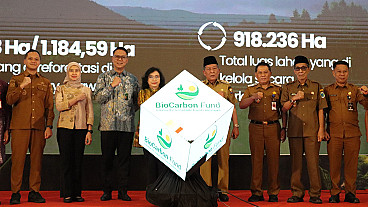
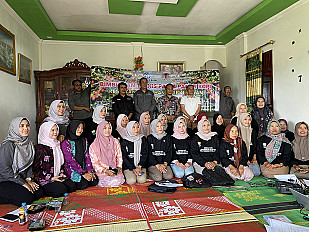
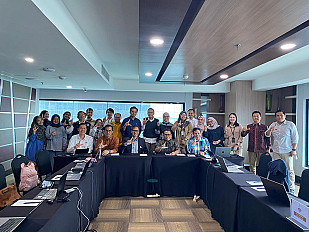
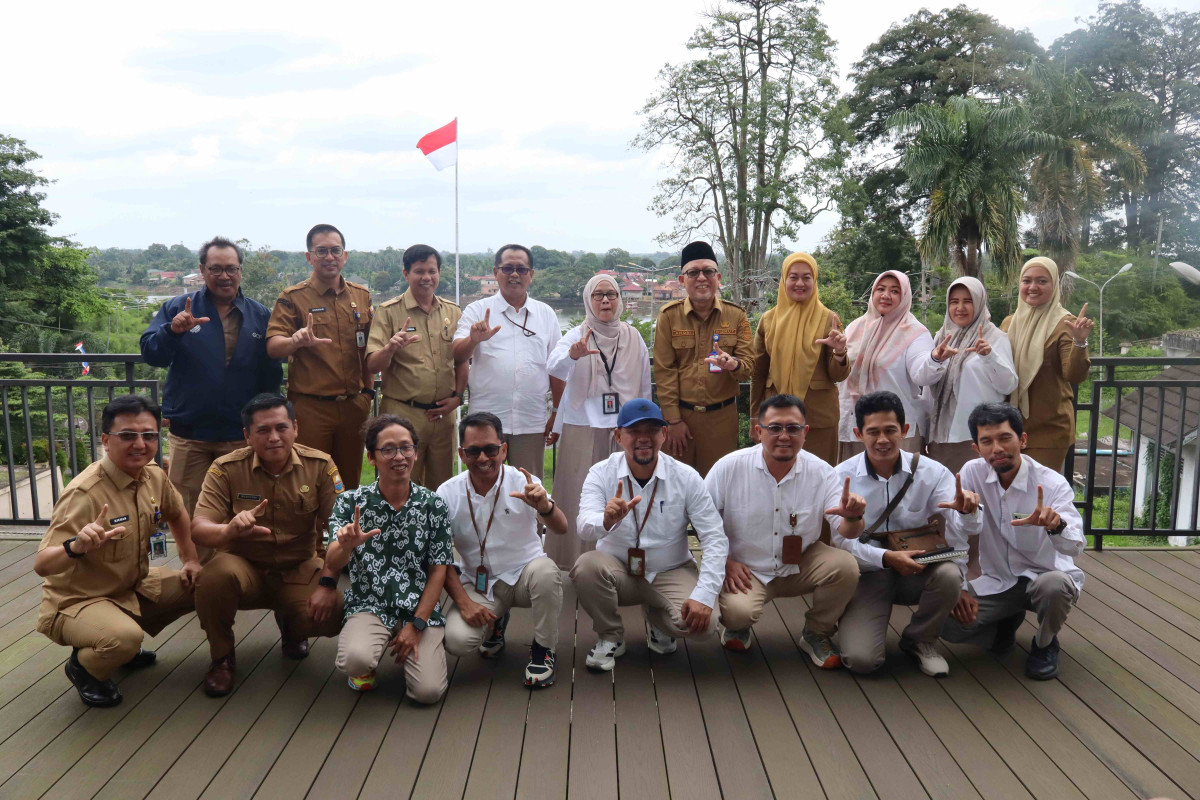
Jambi — The South Kalimantan Provincial Government conducted a working visit and provided technical assistance to Jambi Province to directly study the implementation practices of forestry and land use-based emission reduction programs through the BioCF-ISFL and REDD+ schemes. This activity is part of South Kalimantan's efforts to strengthen regional preparedness, particularly in terms of social and environmental protection (safeguards), benefit-sharing mechanisms, and emissions measurement, assessment, and reporting systems.
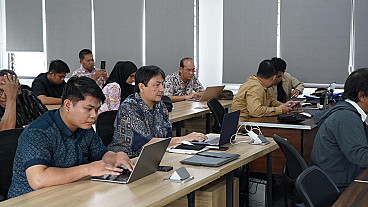
During the visit, the South Kalimantan Provincial Government team received a comprehensive presentation on the governance of the BioCF-ISFL Program in Jambi Province, including institutional aspects, safeguard implementation, community complaint mechanisms, the Free, Prior, and Informed Consent (FPIC) process, the Benefit Sharing Mechanism (BSM), and the existing Measurement, Assessment, and Reporting (MAR) system.
The presentation on the Monitoring and Evaluation (Monev) system demonstrated that Jambi Province has developed a structured results framework, with Project Development Objective (PDO) indicators and Intermediate Result Indicators (IRI). This framework is used to monitor the achievements of emission reduction programs, including sustainable land management, greenhouse gas emission reduction, forestry and land use policy reform, safeguard system strengthening, tenurial conflict resolution, and the operationalization of the MRV/MAR system at the provincial level.
From an implementation perspective, Jambi also outlined practices for collecting, verifying, and validating program performance data, integrated with the Annual Work Plan and supported by evidence documents on activities, policies, partnerships, and forest unit management plans. This system serves as the basis for performance reporting to stakeholders, including the central government and funding partners.
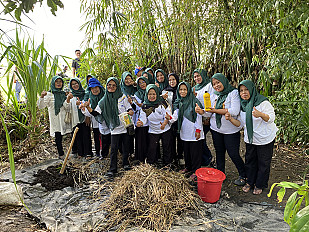
In addition to institutional and system aspects, the South Kalimantan team also studied the implementation of BioCF activities at the grassroots level, particularly in the agricultural sector through the Jambi Province Food Crops, Horticulture, and Livestock Service. Activities implemented during the 2022–2026 period include increasing farmer capacity through various technical guidance, developing environmentally friendly agricultural models, post-harvest management, facilitating market partnerships, and procuring supporting facilities and infrastructure.
These programs are aimed at increasing smallholder agricultural productivity while supporting sustainable land management practices that contribute to emissions reductions. Activities also include strengthening farmer capacity in the processing of organic fertilizers, botanical pesticides, and animal feed, as well as efforts to prevent and manage farmland fires. Implementation of activities will be carried out in stages in various BioCF intervention districts in Jambi Province.
From the perspective of the South Kalimantan Provincial Government, this visit provided a concrete illustration of the implementation of a jurisdiction-based, integrated, cross-regional emission reduction program. The institutional model implemented in Jambi involves the provincial SNPMU structure with support from the Safeguards, MAR, BSM, and Monitoring and Evaluation divisions, which are deemed relevant for replication in the regional context.
The South Kalimantan team also assessed Jambi's practice in developing and operating a safeguards framework as a key learning experience. This system ensures that every emission reduction activity takes into account social and environmental protection, stakeholder participation, respect for the rights of indigenous and local communities, and biodiversity conservation. Instruments such as the SESA, ESMF, FPIC, and a public complaint mechanism have been implemented as part of the program's standard operating procedures.
This working visit also served as a forum for exchanging experiences between regions in facing the transition from the preparatory phase to the results-based payment (RBP) phase, including strategies for strengthening human resource capacity, data and technical equipment needs, and opportunities for future access to climate finance.
Through this mentoring and knowledge exchange, the South Kalimantan Provincial Government affirmed its commitment to accelerating the system and institutional readiness of regional emission reduction programs, while simultaneously promoting sustainable forestry and land use governance.
During the visit, the South Kalimantan Provincial Government team received a comprehensive presentation on the governance of the BioCF-ISFL Program in Jambi Province, including institutional aspects, safeguard implementation, community complaint mechanisms, the Free, Prior, and Informed Consent (FPIC) process, the Benefit Sharing Mechanism (BSM), and the existing Measurement, Assessment, and Reporting (MAR) system.
The presentation on the Monitoring and Evaluation (Monev) system demonstrated that Jambi Province has developed a structured results framework, with Project Development Objective (PDO) indicators and Intermediate Result Indicators (IRI). This framework is used to monitor the achievements of emission reduction programs, including sustainable land management, greenhouse gas emission reduction, forestry and land use policy reform, safeguard system strengthening, tenurial conflict resolution, and the operationalization of the MRV/MAR system at the provincial level.
From an implementation perspective, Jambi also outlined practices for collecting, verifying, and validating program performance data, integrated with the Annual Work Plan and supported by evidence documents on activities, policies, partnerships, and forest unit management plans. This system serves as the basis for performance reporting to stakeholders, including the central government and funding partners.
In addition to institutional and system aspects, the South Kalimantan team also studied the implementation of BioCF activities at the grassroots level, particularly in the agricultural sector through the Jambi Province Food Crops, Horticulture, and Livestock Service. Activities implemented during the 2022–2026 period include increasing farmer capacity through various technical guidance, developing environmentally friendly agricultural models, post-harvest management, facilitating market partnerships, and procuring supporting facilities and infrastructure.
These programs are aimed at increasing smallholder agricultural productivity while supporting sustainable land management practices that contribute to emissions reductions. Activities also include strengthening farmer capacity in the processing of organic fertilizers, botanical pesticides, and animal feed, as well as efforts to prevent and manage farmland fires. Implementation of activities will be carried out in stages in various BioCF intervention districts in Jambi Province.
From the perspective of the South Kalimantan Provincial Government, this visit provided a concrete illustration of the implementation of a jurisdiction-based, integrated, cross-regional emission reduction program. The institutional model implemented in Jambi involves the provincial SNPMU structure with support from the Safeguards, MAR, BSM, and Monitoring and Evaluation divisions, which are deemed relevant for replication in the regional context.
The South Kalimantan team also assessed Jambi's practice in developing and operating a safeguards framework as a key learning experience. This system ensures that every emission reduction activity takes into account social and environmental protection, stakeholder participation, respect for the rights of indigenous and local communities, and biodiversity conservation. Instruments such as the SESA, ESMF, FPIC, and a public complaint mechanism have been implemented as part of the program's standard operating procedures.
This working visit also served as a forum for exchanging experiences between regions in facing the transition from the preparatory phase to the results-based payment (RBP) phase, including strategies for strengthening human resource capacity, data and technical equipment needs, and opportunities for future access to climate finance.
Through this mentoring and knowledge exchange, the South Kalimantan Provincial Government affirmed its commitment to accelerating the system and institutional readiness of regional emission reduction programs, while simultaneously promoting sustainable forestry and land use governance.
Latest News
-thumb.jpg)